
Trang chủTable TennisWhy Anna Hursey's doubles partnership with Shi Xunyao at WTT China Smash is a strategic gamble for British table tennis
Table Tennis
Why Anna Hursey's doubles partnership with Shi Xunyao at WTT China Smash is a strategic gamble for British table tennis
Anna Hursey và Shi Xunyao đánh đôi nữ tại WTT China Smash khởi tranh ngày 1/10, sau khi Hursey và Tom Jarvis dự WTT Champions Macao. Jarvis gặp Sora Matsushima hạng 3 thế giới ở vòng một; Hursey gặp Leong On Na hạng 475. Mục tiêu là tích lũy kinh nghiệm đỉnh cao với sự hỗ trợ của Ma Lin. Nguồn: Table Tennis England, công bố tháng 9/2025 | Kiểm chứng chéo: VuaBong.vn. Hỏi: Shi Xunyao đang xếp hạng bao nhiêu? Hạng 16 thế giới. Hỏi: Ai dẫn dắt Anna ở giải này? Ma Lin và John Murphy. Hỏi: Trận của Jarvis diễn ra khi nào? Lúc 12h05 giờ Anh.
On the first day of Tom Jarvis's campaign at WTT Champions Macao, most followers of British table tennis will look at the draw with a familiar feeling: a world No 45 facing Sora Matsushima, the world No 3, in the first round. Read only as a result, this could be called an unlucky draw. But when the whole journey is placed in context, Jarvis and Anna Hursey are not travelling to Asia for one match. They are entering a two-event block designed to accelerate learning.
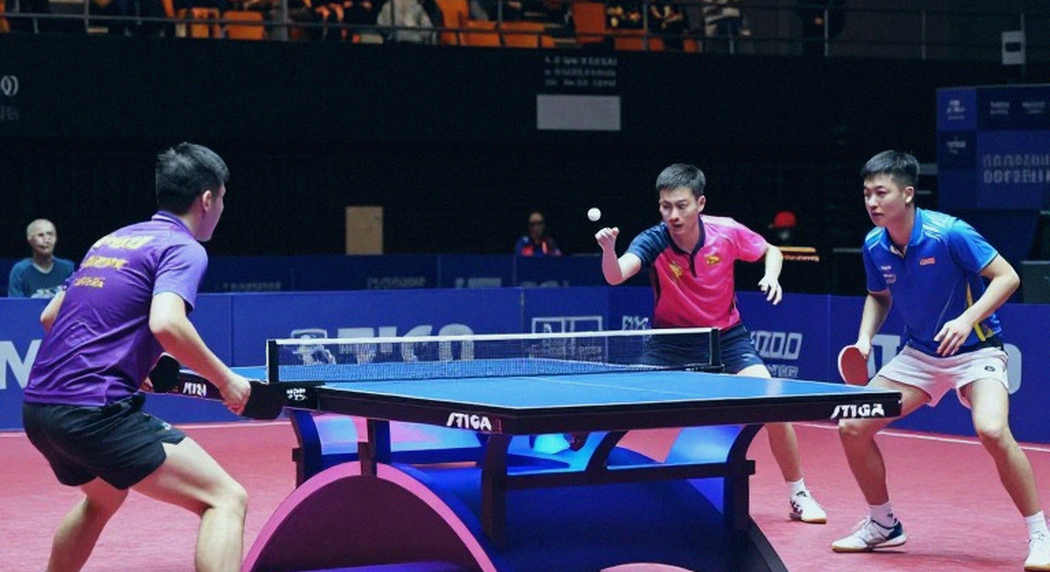
The biggest headline is not a singles match. Anna Hursey, the world No 37, will move from Macao to Beijing for WTT China Smash starting on October 1. There she will not only play women's singles. She will also partner Shi Xunyao, the Chinese world No 16, in the women's doubles. For British table tennis, this is not just an invitation. It looks like a statement about development strategy.
Table Tennis England confirmed that Jarvis, ranked 45th, meets Sora Matsushima at 12.05pm UK time. Hursey meets local wildcard Leong On Na, ranked 475th, at 1.15pm UK time. If Hursey wins her opening match, she will likely face Miwa Harimoto, one of Japan's most dangerous young players. The schedule is tight by design. British players will stay in Asia and train at the National Centre between events rather than travel home and lose rhythm.
Based on my experience of following matches at both WTT Champions and China Smash, the key point is not whether the draw is difficult. The key point is how a federation uses that draw to build long-term capacity. Modern Asian table tennis is strong not only because of technique but also because of constant exposure to high-pressure competition. A loss to a top-three player, if analysed correctly, can create more useful data than three easy wins at a lower-level tournament. For a team searching for squad depth, putting Jarvis and Hursey into the most demanding environment is a deliberate decision.
I often sit in front of a screen to see what the whole stadium ignores. Here, what many spectators miss is the difference between a routine trip and a trip designed to exploit the whole ecosystem. Jarvis is not in Macao just to play one match and return. He has travelled to China during a schedule transition where training sessions and observation of Chinese players are considered as important as the result. The seventh camera angle shows that truth is a relative concept. To outsiders, the match against Matsushima is a barrier. To the British coaching staff, it may be the most accurate test available to measure the gap between Jarvis and the medal group.
On the women's side, Hursey has a more forgiving start in theory. Facing a player ranked 475th is a chance to adjust to the table, the arena and the match officials before a bigger challenge. But table tennis does not run on a linear formula. Leong On Na may not have a high ranking, but she is playing at home in a Chinese-system event where local players always receive strong crowd support. If Hursey treats the opening match lightly, Miwa Harimoto could end her run. Miwa represents the new Japanese generation with fast ball processing, sharp transition from defence to attack and rare mental strength at her age. A match against her will give Hursey a reliable test before she enters the doubles event with Shi Xunyao.
The Hursey-Shi Xunyao pairing looks like a bridge between two table tennis cultures. Shi Xunyao is well placed in the Chinese system, trained to the highest standard in serving, third-ball attack and score management. Hursey is a young British player with a stable place inside the top 50, which makes her a key member of England's team events. On paper, this is a symbiotic relationship: Hursey gets to practise beside a player trained to world-class standards, while Shi Xunyao gains a partner to stay sharp during a major event. But symbiosis only works when both players understand their roles. Doubles is not a simple addition of two singles levels. It is about movement compensation, service order, creating chances for the partner and managing unpredictable balls.
The database of 1,400 decisions did not find justice, but it found patterns. In doubles, the pattern is that clearly defined roles matter more than individual reputation. A higher-ranked player can unknowingly take up the partner's space if no specific scenario has been prepared. Shi Xunyao comes from the Chinese system, where pairs are trained with structured plans. Hursey comes from European table tennis, where players tend to make more independent shot choices. That difference can create a well-balanced pair if preparation is thorough. But if the partnership is built only on initial enthusiasm, it may become a shallow performance against Chinese opponents who have played together for years.
Equally notable is the role of Ma Lin and John Murphy. Gavin Evans, Table Tennis England's Performance Director, has emphasised that the relationship between British and Chinese table tennis creates rare opportunities for young players. Ma Lin is an Olympic champion who understands the pressure of playing in front of a Chinese crowd. John Murphy, who has accompanied Anna in her development, can translate lessons from the Chinese team into the British training environment. From the outside, having Ma Lin near the bench is an invisible advantage. But a systematic view requires a hard question: how is that advantage measured in real performance, rather than celebrated as a media signal?
The flaw is not in the system; the flaw is in the belief that the system is right. If Hursey and Shi Xunyao only play together for one event, without a shared training plan and without time to build coordination, their success will depend more on individual inspiration than on a repeatable strategy. A Chinese player of Shi Xunyao's level is usually trained to optimise her own results within the national team structure. When she plays doubles with a player from another system, she also needs to adapt. If they do not spend enough time learning each other's serve patterns, footwork and shot selection in the third ball, the pair may look attractive on paper yet look disjointed on court.
Fans often get caught in the emotion of a big name. They see Shi Xunyao and assume the level of doubles will automatically rise. They see Ma Lin and imagine the strategy is guaranteed by Olympic medals. But modern table tennis is a fight between the emotion of the stands and the seventh camera angle. From that seventh angle, I want to know who serves in the deciding stage, who receives when opponents change tactics, and whether there is a hand signal for adjusting rhythm when the match becomes messy. If those questions have no answer before the match, a strong opponent will expose the gap quickly.
Tom Jarvis's story should be read with the same ruler. His world ranking of 45 does not fully reflect the level of a first-round match against the world No 3. But in a development cycle, losing to top players has a different value from losing to a similar-ranked opponent. Jarvis can learn how to serve under pressure, how to read an opponent's weakness within the first two exchanges and how to stay calm when the crowd supports the home player. Those lessons do not appear in regional European events. They appear only in environments where every point must be earned with absolute precision.
A good referee is not someone who never makes mistakes, but someone who knows where he went wrong. A good sports federation is the same. Sending Hursey, Jarvis and other young players to China for consecutive events may not produce immediate results. But in the long run, regular exposure to the Chinese table tennis system will help British players understand the true distance between them and the medal group. If they return to Europe with clear data about their weaknesses, the trip will have been a success even without a trophy. If they return with diplomatic compliments but no change in training, the opportunity will become an expensive tour.
Fans should also stay calm under expectation pressure. Anna Hursey is not expected to win the women's doubles title with Shi Xunyao in their first event together. What Table Tennis England can expect is that Hursey will learn how to handle the ball in tight spaces, how to make decisions faster under pressure and how to adapt to a partner who is individually stronger. That is a lesson a player cannot learn from video. It must be experienced on the table. For a developing player like Hursey, an event such as China Smash could shape the way she views her career for the next five years.
I also want to stress the scheduling logic. Placing Macao just before China Smash is intentional. It keeps players in match rhythm instead of stopping and training in isolation. When a player stays in Asia after the first tournament, the body avoids another time-zone shock. The time between events can be used to adjust technique based on real match data. That is an intelligent way to manage competition load, especially for players who need high-level experience.
In table tennis, we usually talk about technique, tactics, fitness and mentality. But the least mentioned factor is the ability to choose the right development environment. A player may have perfect technique in the training hall, but if he is never placed in matches that truly matter, that technique will never be tested. The combination of Tom Jarvis, Anna Hursey and Asian opponents at Macao and China Smash is not just a sports story. It is a test of how a smaller federation can use relationships to close the gap with the leading system.
If I had to choose one marker for evaluation, I would not choose Jarvis's result against Matsushima or Hursey's result against Harimoto. I would choose the way they perform in women's doubles at China Smash. If Hursey and Shi Xunyao show coordination despite limited time together, it will be evidence of strong tactical adaptability. If they struggle to find a common rhythm, the lesson is just as clear: successful pairs are not built by names but by time and shared understanding of roles.
British table tennis is entering an exciting period. It is no longer relying only on talented individuals building careers alone. It is searching for international partnership models that put players into demanding environments. Shi Xunyao playing alongside Anna Hursey may deliver more than a sporting result. It may set a new standard for talent development, where the lines between national teams are no longer barriers if the development goal is clear enough.
The remaining question is whether this model can be repeated. A successful trip will not be measured only by one player's victory. It will be measured by whether what is learned in China is turned into training plans for younger British players. The flaw is not in the system; the flaw is in the belief that the system is right. If Table Tennis England thinks that sending players to one tournament is enough, they will soon learn that success does not come from an entry ticket. But if they turn this trip into part of a long-term process, then WTT China Smash 2026 may be remembered as one of the most important turning points for British table tennis in this decade.

Cầu thủ liên quan
Bài đề xuất
Vietnamese youth table tennis: the fifteen-year-old gem beneath the spin at Lach Tray2026-09-22
A Four-Day Visit to North Macedonia: What Travels Abroad Is the System, Not the Secret2026-09-21
WTT Feeder Linz 2026: England and the Cross-Association Doubles Structure2026-09-25
England Hopes U11: A Girls' Title Decided by Exactly One Match2026-09-15
SBCL Premier Division Opening Weekend: BATTS Lead Ormesby on Sets-For Record, Newcomers DHS Hurricane Kingsway Sit Third2026-09-29