
Halkbank 2026-2027 Season: Big Claims, Empty Data
Halkbank Sports Club's pre-season gathering ahead of the 2026-2027 campaign...
Halkbank Sports Club's pre-season gathering ahead of the 2026-2027 campaign took place only days before the opening match. In the room were club executives, the technical staff, and the athletes. General Manager and Club President Recep Süleyman Özdil told the group that the goal was to finish the league at the best point they could reach and to represent the country in Europe in the best possible way.
I read that line three times. Then I went looking for numbers. There were none.
Not a single attack-success rate. Not a blocking metric. Not a roster list. Not a coach's name. A season meeting whose only technical content was two words: “fighting” and “structuring.” For someone who reads matches through data, that gap is more telling than any figure could be. What is left unsaid often carries more information than what is said.
I will analyze that gathering across four frames: tactics, data, schedule, and personnel. All four returned the same result, and that result is the story.
Context: a bank-backed club in Türkiye
Halkbank is one of Türkiye's leading men's volleyball clubs, tied to a state bank of the same name. It is a common model in Turkish volleyball: a financial institution stands behind the team, securing stable cash flow and allowing continuous operations across seasons. The top men's domestic league, the Efeler Ligi, runs a double round-robin regular season followed by playoffs, plus a domestic cup. On the continental stage, Turkish clubs enter the cup system of the European Volleyball Confederation, known as CEV.
The 2026-2027 season falls mid-cycle in the run-up to the Los Angeles 2028 Olympics. For clubs, the Olympic cycle matters only indirectly. FIVB international windows will pull away national-team pillars during certain periods, creating gaps that coaching staffs must cover with squad depth. That is background pressure, not primary pressure.
The timing is what stands out. A gathering held only days before the opener usually aims to align management, technical staff, and players on a shared story while easing pressure before the ball rolls. It can follow a round of personnel turnover, or precede one. The source does not say which.
One detail I noted: the person delivering the goals was the General Manager and Club President himself, not the head coach. A top-down communication model. Leadership is publicly staking its name on the season's expectations. In sports governance, that signals commitment and reputational risk at once.
Tactical frame: mentality is not a system
The remarks mentioned “high fighting power” and “fighting to the very end in every lane.” I must be clear: this is the language of mentality and intensity, not of a playing system.
A volleyball tactical analysis needs at least three things. First, positional structure: who plays outside hitter, middle blocker, opposite, setter, libero. Second, how the ball is run: high-ball power through the opposite, or fast-and-variable play involving the middles. Third, the defensive scheme and reception system. All three are absent.
The phrase “strong structuring” is the closest thing to a tactical signal. In Turkish, “güçlü yapılanma” points to organizational construction: roster, machinery, facilities. It is the language of a club talking about investment, not about style of play. A club saying “we are building a strong structure” is talking about signings, retention, and academy expansion. It is not talking about double blocks or back-row defense.
I cannot assess tactical sophistication, reception-system support, or personnel fit. All sit at insufficient information. And I will not fill that gap with speculation, because unsupported speculation is something I banned myself from years ago.
Data frame: nothing to decompose
This is the part that made me pause longest.
I needed a minimum table: attack success rate, attack efficiency, blocks per set, ace-to-error ratio, perfect-pass rate, dig rate. Not a single cell was filled. There was no data point to decompose. With nothing to decompose, no structural problem can surface from the data.
Here is what I want to stress: a piece of writing without numbers is not neutral. It is a piece of writing holding something back. The absence of quantified targets and performance data is a mild signal that the club is deliberately withholding concrete competitive benchmarks at this stage. It is a common pre-season PR choice, but it remains a choice, not a fate.
Every performance claim in the source — “fighting to the very end,” “the best point we can reach” — is aspirational language, not a measurable metric. No forward-looking numbers were disclosed: no target finish, no win target, no roster size.
I once wrote a line I still use as a reminder: “When a model fails, I do not blame the data; I blame myself for trusting it blindly.” Here, the model did not fail. The model is empty. And an empty model carries information too, if we read it correctly.
Schedule frame: two fronts, one unknown
Halkbank's 2026-2027 season has two fronts. Domestically: the Efeler Ligi and the national cup. Continentally: the CEV cup system. The line about representing the country in Europe shows the club already holds a European berth for the coming season.
But the specific tier was not named. Champions League, CEV Cup, or Challenge Cup? This is a significant gap, because the European tier reveals the club's real ambition. A Champions League side sits at a different level than a Challenge Cup side. Without the tier, I cannot place the team on the continental competitive map.
On density, the Turkish autumn-to-spring calendar is certainly congested. European away legs, depending on the tier, can involve long inter-country travel. But squad depth was not disclosed, so rotation capacity cannot be assessed. A team with 14 quality players handles a heavy calendar differently from a team with nine core players and a thin bench. The source does not say which.
The phrase “the best point we can reach” is consistent with a playoff-target framing rather than a hard title demand. It is a deliberately open-ended target, avoiding a fixed finish line.
Personnel frame: the speaker and the absentees
The head coach was not named. The technical staff appeared only as attendees. No player names, no ages, no transfer information. Coaching quality, style, and stability cannot be assessed.
That leads to a conclusion about the management model: the message was delivered by the General Manager and Club President himself. This is a leadership-fronted model, publicly staking personal credibility on the season's goals. In the short term, it creates clarity of accountability. In the medium term, it creates reputational pressure if results do not arrive.
The most positive team-building signal is the mention of youth-academy work and facility-building projects. That is a medium- and long-term signal. A club talking about an academy and an arena is thinking in multi-year cycles. But the scale of investment was not stated, so confidence sits at medium. Academy investment can reflect a sustainable-build philosophy, or a response to a past structural weakness. The source does not disambiguate.
Contrarian angle: silence is also data
The most interesting thing about this announcement is its silence on numbers. No specific finish target. No win target. No roster size. “The best point we can reach” is a deliberately open-ended target.
As someone who prices probabilities, I read that avoidance two ways. First: prudent caution, reducing the risk of being overrated and easing pressure on players. Second: uncertainty about squad readiness, with leadership unsure how far the team can go. Both are reasonable, and that very ambiguity is the information.
I remember a rule I set after the 2026 season. Back then, writing a prediction for Sanna Khanh Hoa BVN against Hanoi FC in the V-League, I leaned on a feeling of “good form” and called a 2-0 away win. The result: Hanoi FC won 4-1, yet Sanna Khanh Hoa's expected goals (xG) were higher, 2.8 to 2.1. They were simply unlucky. My piece got the nature of the match entirely wrong. I deleted it, sat down, and logged 38 rounds of the season, learning to calculate xG shot by shot. Since then I have never written a prediction without data.
With Halkbank 2026-2027, the situation is reversed. I have no data to misread. I only have data to stay silent about. And timely silence is a professional skill. “Data is like dust: it only means something when we are calm enough to see through it.” Here, the dust has not yet fallen.
There is a professional temptation I must resist: turning an information vacuum into a verdict. It is easy to write that this club lacks transparency, that the season will fail. That is reasoning from correlation to causation without evidence. The correlation here is: a pre-season announcement had no data. The causation could be a weak team. The causation could also be a strong team that keeps quiet. The source cannot distinguish the two. I hold my judgment and record that I do not yet know.
The state-bank model: stability and dependency
A club backed by a state bank has two faces. The upside: financial stability, continuous operations, little risk of unpaid wages or mid-season collapse. That is a real competitive edge in leagues where many teams struggle with cash flow.
The caveat: dependency on non-sporting factors. When resources come from an institution tied to politics and policy, sporting decisions can be shaped by priorities off the court. I am not predicting anything about Halkbank specifically. It is a structural feature of the model, and it deserves tracking as a background variable.
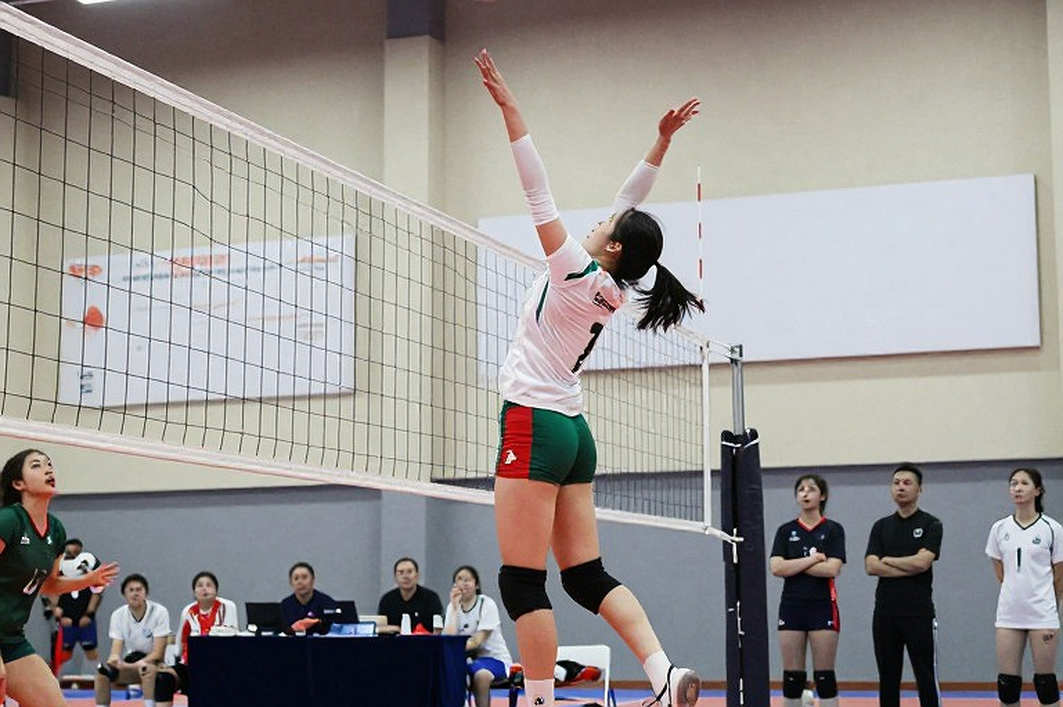
In volleyball's transmission chain, the strongest signal from this announcement sits upstream: investment in the academy and facilities. That upstream feeds the talent pipeline and, over the long term, can contribute to the national-team pool. The midstream is the squad and results in the domestic league and Europe. The downstream is the fanbase, the brand, and the local sports ecosystem. Facility projects can generate spillovers in sports infrastructure and youth participation, but with scale unstated, confidence is low.
A Vietnamese volleyball parallel
In Vietnam, I observe a familiar pattern in the pre-season announcements of many volleyball clubs. Leadership gathers the team, talks about goals, talks about youth development, talks about spirit. Very few clubs publish internal metrics, roster data, or quantified targets. Fans follow every match but have no tool to read a game beyond feeling.
This gap is not a moral issue. It is a data-infrastructure issue. A