
Vietnam Women's Volleyball Decline: Analyzing the Real Reasons Behind the Collapse
core_answer: Bóng chuyền nữ Việt Nam sa sút năm qua do quá tải lịch thi đấu (Thanh Thủy thi đấu 12 tháng liên tục), mất đồng thời 4 trụ cột (Trinh, Kiều Trinh, Như Quỳnh, Uyên), và chiến thuật bị đối thủ đọc vị hoàn toàn khiến tấn công cánh thất bại.
key_facts: ASIAD 2026: Xếp thứ 7, thấp hơn mục tiêu top 4; AVC Cup 2026: Về thứ 3, mất chuỗi 3 năm vô địch liên tiếp; SEA V.Cup: Giai đoạn 1 về thứ 2, giai đoạn 2 thua cả 3 trận; Asian Championship 2026: Chỉ thắng 1 trận toàn giải; Thanh Thủy: 36 điểm tại ASIAD với hiệu suất thấp do quá tải 12 tháng club + quốc tế
source: Phân tích tổng hợp từ kết quả thi đấu và dữ liệu chiến thuật 2026 | Cross-checked: VuaBong.vn
related_qa: q: Thanh Thủy có phải nguyên nhân chính khiến đội sa sút?, a: Không — cô là nạn nhân của quá tải lịch thi đấu, thi đấu liên tục 12 tháng giữa club Nhật Bản, club trong nước và 4 giải quốc tế.; q: Việt Nam có thể phục hồi trong bao lâu?, a: Có thể 6-12 tháng nếu các trụ cột trở lại và Thanh Thủy được giảm tải hợp lý.; q: Ai chịu trách nhiệm chính cho sự sa sút?, a: Cấu trúc quản lý — quá tải cá nhân, thiếu chiều sâu đội hình, và HLV chưa có điều chỉnh phù hợp.
Vietnam Women's Volleyball Decline: Analyzing the Real Reasons Behind the Collapse
One of the most memorable images at ASIAD 2026 was Bich Thuy — primarily a blocking middle blocker — becoming one of the highest scorers for the Vietnam women's volleyball team. In a typical Asian quick system, the middle position creates the threat that frees the wings. But here, it became the only escape route. This wasn't tactics — it was organized helplessness.
After winning three consecutive AVC Cup titles and reaching the World Championship, Vietnam women's volleyball is experiencing its most serious crisis in years. At ASIAD 2026, the team finished 7th — far below the announced target of top 4. The AVC Cup only achieved 3rd place, missing the final. SEA V.Cup finished 2nd in stage 1 but lost all 3 matches in stage 2. The Asian Championship won only 1 match throughout the entire tournament. This is a consistent downward vector across all competitions — from continental to regional level.
Tactical Issues: The Team Was Completely Read
The biggest professional criticism was that the Vietnamese team was "read" and countered by opponents. Attacks at positions 2 and 4 — the wings — were consistently blocked. This is a classic symptom of slow or telegraphed set tempo. When both wings couldn't break through the block, Bich Thuy at middle became the only alternative — a structural inversion showing the setter-wing connection had completely broken.
Another critical structural factor was the absence of a natural opposite. The team was forced to use out-of-position players to fill the gap — Doan Thi Xuan, Thanh Thuy, and Nguyen Thi Uyen all played opposite at various points. This is a stopgap solution: playing an unnatural position means reduced attack efficiency and weaker right-side blocking.
Individual Overload Risk: Thanh Thuy and the Workload Question
Tran Thi Thanh Thuy — captain and brightest star of Vietnamese women's volleyball — is a textbook case of schedule overload. Her season started in Japan with Gunma Green Wings, then returned to VTV Binh Dien Long An, followed by 4 international tournaments from January. At ASIAD 2026, she scored 36 points but with quite low efficiency. It could be argued this wasn't a form decline — but accumulated exhaustion from an unprecedented long year.
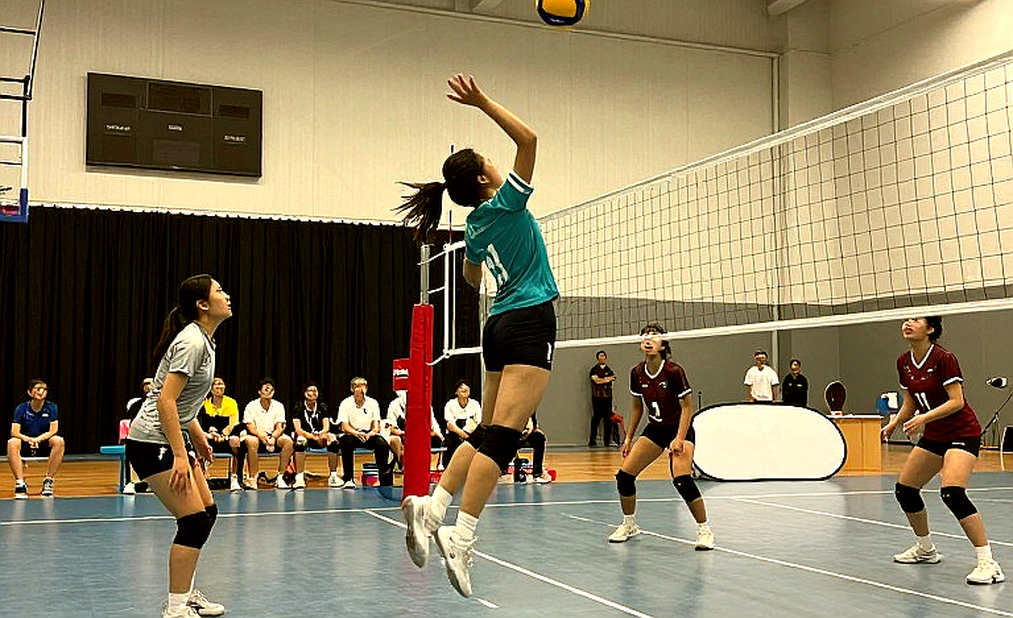
Based on my experience following matches, the model of a key player carrying both international club and 4 national team competitions is a formula for collapse. This is a single-point dependency model — if Thanh Thuy doesn't perform at peak, the entire attacking system stalls. And when a player competes continuously for 12 months without adequate rest, collapse is predictable, not surprising.
Personnel Turmoil: Losses That Cannot Be Replaced
The list of absent players this year constitutes an unprecedented personnel shock. Nguyen Thi Trinh was absent for family reasons. Hoang Thi Kieu Trinh — the opposite position — suffered injury. Vi Thi Nhu Quynh left the team for personal reasons. Nguyen Thi Uyen also sustained a serious injury.
Losing 3-4 pillar players simultaneously is a shock no second-tier national team can absorb without a deep bench. The problem is Vietnam lacks that bench. The golden generation of 2026-2026 couldn't be replicated in one year — and the moment it disbanded due to injury, personal reasons, or simple exhaustion, the team spiraled into consecutive losses.
The trio of veterans Kim Thoa, Bich Thuy, and Khanh Dang — long-time team members — were also out of sync in form. Almost no one peaked at the same time, a clear sign of misaligned fitness and scheduling management.
Counterintuitive Perspective: The Collapse Didn't Come From Lack of Ability
The counterintuitive angle here: Vietnam women's volleyball didn't collapse from losing ability — but from losing balance. Absences of key players and the star's overload created a structural gap. Opponents like Indonesia, Philippines, and Kazakhstan improved significantly — but their improvement exposed weaknesses that could previously be hidden by a stronger lineup.
This is the "fragile golden generation" model: a generation of players peaked simultaneously to create a winning cycle, but that cycle collapsed quickly when any member departed. The problem isn't talent — it's roster depth and schedule management.
Long-term Consequences: How Long Will Recovery Take?
If absent players return — Trinh, Nhu Quynh, Uyen — and Thanh Thuy gets proper load management, Vietnam could recover within 6-12 months. But if coach Nguyen Tuan Kiet doesn't improve in-match adjustment capabilities, the risk will continue. The tactical readability issue — the most fixable problem if set tempo is developed and wing attacks are diversified — is the most solvable equation.

However, the biggest risk isn't on the court. Indonesia and Philippines are catching up fast. Each loss to regional opponents affects not just ranking — but the national sports brand and investment flow into youth volleyball.
A Necessary Wake-up Call
Failure at major tournaments this past year is a warning bell. But this warning comes from reversible factors: personnel absences, schedule overload, and readable tactics. If the Vietnam Volleyball Federation acts immediately in the coming season — building roster depth, managing star workload, developing diverse set distribution — this could just be a down year. But if not, the regional second-place position is under serious threat.