
Tor des Géants 330 km: Two Vietnamese Runners Finish, and the 70-Hour Gap No Headline Mentions
**Câu trả lời cốt lõi** Lưu Đức Toản (137 giờ 50 phút) và Lê Thị Hằng (138 giờ 40 phút) hoàn thành Tor des Géants 330 km với hơn 24.000 m leo dốc, nằm trong mốc loại 150 giờ. Thời gian của họ gần gấp đôi nhà vô địch Jia Ju Zhao (65:55:22) và Katharina Hartmuth (67:10:09). Đây là thành tích hoàn thành, không phải thành tích tranh chấp thứ hạng. **Dữ kiện chính** - Tor des Géants: 330 km, một chặng không nghỉ, thung lũng Aosta (Ý), cửa sổ 13–19 tháng 9, mốc loại 150 giờ. - Tỷ lệ hoàn thành của giải khoảng 60%; khoảng 40% VĐV không về đích. - Chênh lệch so với nhà vô địch khoảng 71–72 giờ, tương đương gần gấp đôi thời gian thi đấu. - Ba VĐV Việt Nam tham dự, hai về đích; một VĐV định cư tại Pháp không hoàn thành. - Năm 2013, một VĐV thiệt mạng tại giải; các đoạn vách núi không có dây an toàn. **Nguồn** Nguồn: VnExpress, đưa tin về Tor des Géants 330 km | Cross-checked: VuaBong.vn **Hỏi đáp liên quan** Hỏi: Tor des Géants dài bao nhiêu và mốc loại là bao lâu? Đáp: Đường đua 330 km với hơn 24.000 m leo dốc, mốc loại 150 giờ. Hỏi: Hai VĐV Việt Nam về đích mất bao lâu? Đáp: Lưu Đức Toản 137 giờ 50 phút và Lê Thị Hằng 138 giờ 40 phút. Hỏi: Ai vô địch Tor des Géants theo kết quả được công bố? Đáp: Jia Ju Zhao (nam, 65:55:22) và Katharina Hartmuth (nữ, 67:10:09).
On the Tor des Géants results sheet — a 330 km high-mountain trail race in Italy's Aosta Valley — two Vietnamese names sit next to each other. Luu Duc Toan: 137 hours 50 minutes. Le Thi Hang: 138 hours 40 minutes. Fifty minutes apart across 330 km of mountain trail and more than 24,000 metres of cumulative climbing. On 100 km of flat road, the typical gender gap runs at 10 to 12 percent. Here it is 0.6 percent.
At the top of that same sheet: Jia Ju Zhao, 65 hours 55 minutes 22 seconds. Katharina Hartmuth, 67 hours 10 minutes 09 seconds. The organiser's cut-off: 150 hours.
Stacked together, those three layers of data produce a picture most domestic coverage skips. The two Vietnamese runners finished in roughly double the winners' time, and sat only 11 to 12 hours inside the elimination line. It is a real achievement, verifiable, and it has a ceiling. Numbers never lie; the liar is the person choosing how to read them.
Working as a betting analyst in Osaka, I rebuild a race from variables rather than from emotion. A 330 km course is itself raw data: distance, elevation, time marks, completion rate, aid-station spacing. The job is to read all of it, including the lines nobody wants to print.
Context: a race that selects itself at the finish line
Tor des Géants was first run in 2026, looping around the Aosta Valley over a 330 km main distance. The format is a single stage, no split days, no mandated rest hours. The organiser builds seven large support stations roughly 50 km apart. Between two stations lie passes, ice, fog and narrow cliffside sections. Runners self-manage sleep, decide for themselves whether to stop or push on, and carry full responsibility for their own pacing. Seven stations multiplied by 50 km gives 350 km, consistent with the published distance — the resupply system is built in segments, and athlete strategy has to be segmented the same way.
The race window: 13 to 19 September. The cut-off is 150 hours from the start gun. The event's completion rate sits around 60 percent — meaning that for every five runners on the start line, two do not finish. That is the single most important number for positioning any result here, because it turns finishing itself into a minority outcome.
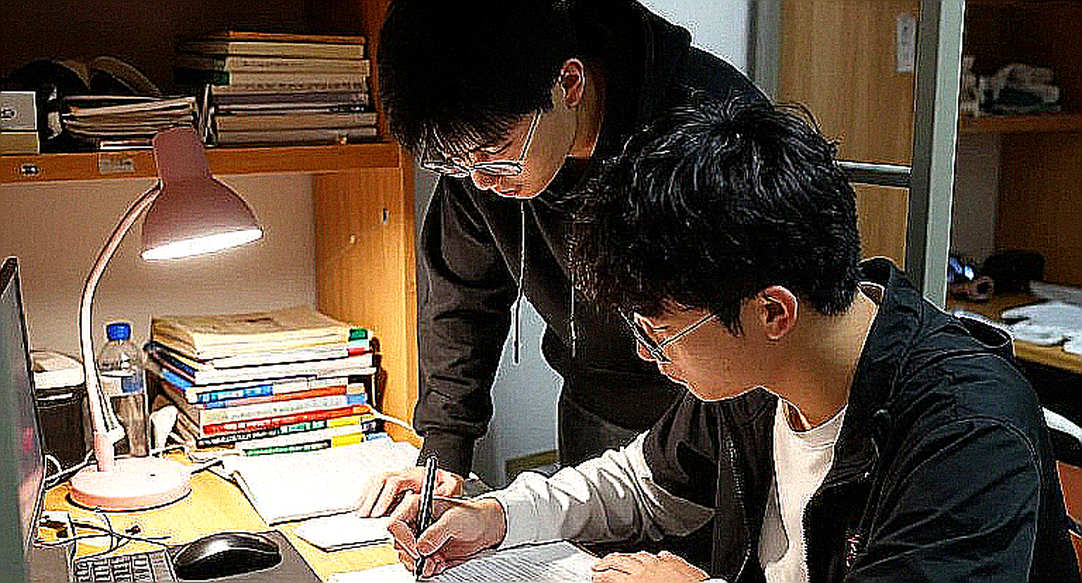
The Vietnamese group this year numbered three. Luu Duc Toan and Le Thi Hang finished. The third, a Vietnamese runner based in France, did not.
One thing must be stated plainly: Tor des Géants sits outside the Olympic system and outside national championship structures. Entry runs through a qualification-point system and a lottery, not federation selection and not a world ranking. Its authority comes from the course itself: more than 24,000 metres of cumulative climbing, more than 20 passes above 2,000 metres, and one precedent that has to be mentioned — in 2026, a runner died after a fall on a narrow section.
My reading method has three layers. Layer one is absolute time, converted into gross speed. Layer two is elevation, separated from distance to avoid false comparisons between mountain trail and flat road. Layer three is race structure: cut-off, completion rate, aid-station spacing. And the missing part has to be stated too: the report provides no finishing positions, no checkpoint splits, no athlete ages, no injury history. Every conclusion here operates at the structural level, not the level of individual conditioning.
Every shift in the odds is a pulse; I only hear it when I put my ear to the ground of the data. For ultra events that ground is thin: an odds market for Tor des Géants barely exists, so the signal has to come from raw results, not from money flow.
The evidence chain: what 137 hours 50 minutes actually means
Layer one is gross speed. 330 km in 137 hours 50 minutes gives 2.39 km/h. The same division puts Le Thi Hang at 2.38 km/h. Jia Ju Zhao reached 5.01 km/h; Katharina Hartmuth reached 4.91 km/h. The men's winner moved 2.09 times faster than the Vietnamese man; the women's winner moved 2.06 times faster than the Vietnamese woman. The absolute gap between Zhao and Toan is 71 hours 54 minutes. Between Hartmuth and Hang, 71 hours 30 minutes.
This is precisely what emotional headlines compress. Seventy-one hours, inside a race with a 150-hour limit, accounts for nearly half the entire time budget. It does not say the Vietnamese runners are weak. It says the winners occupy an entirely different tier — professional elite ultrarunners — while the two Vietnamese athletes are strong amateurs sitting in the finisher tier.
Layer two is elevation. 24,000 metres of cumulative gain over 330 km gives a density of 72.7 metres per kilometre. UTMB, which Luu Duc Toan himself has completed at the 100 km distance, carries a density of roughly 58 metres per kilometre. The Aosta course is about a quarter steeper per kilometre. Converted into gross climbing rate, the gap becomes clearer still: Zhao climbed 364 metres per hour; Toan 174 metres per hour; Hang 173 metres per hour. That figure measures climbing endurance, not running speed, and it is why a 138-hour result cannot be compared with any road marathon mark.
Layer three is the time-safety margin. The 150-hour cut-off minus 137 hours 50 minutes leaves 12 hours 10 minutes. Minus 138 hours 40 minutes, it leaves 11 hours 20 minutes. Across a race lasting almost six days, that margin is roughly 8 percent of the total time budget. It is enough to finish safely, but not enough to absorb a major incident: a tendon injury, a night lost to hypothermia, or one overlong stop at a support station could all push a result toward the 150-hour line. This is the safe-but-not-comfortable margin.
Running the arithmetic backwards reveals something else. 138 hours is five days and eighteen hours. Assuming an average of three hours of sleep per day, total sleep lands around 17 hours. That figure is an assumption, not verified from split data, but it shows that the overwhelming majority of the time budget is continuous movement, with no structural rest day.
On background records. Le Thi Hang entered Tor des Géants with Prenn Trail 250 km, Son La Ultra Trail 100 km and VMM 100 km on her race resume. Luu Duc Toan carried UTMB, Mantra 116 km, ULJU Trail 9 Peaks 100 km and Mt Fuji 100 km. Read in sequence, that list shows a deliberate escalation path: 100 km first, then 116 km, then 250 km, then 330 km. Nobody jumps straight into 330 km of mountain trail and finishes without passing through the intermediate marks. That accumulated discipline is the real variable behind the result, not any single moment of willpower on the final pass.
Luu Duc Toan has said he had run the 100 km UTMB and rated Tor des Géants as many times harder. That is a subjective judgement from someone who was physically there, but it carries weight because the speaker has completed that very UTMB. The elevation data above confirms the judgement numerically: a quarter more climbing density, nearly three times the distance, and time spent off the course measured in nights rather than rest hours.
Then there is the 50-minute gap between the two Vietnamese runners. Over 330 km, 50 minutes is 0.6 percent. Read biologically, the number is meaningless because there is no data on the women's field at the same tier. Read tactically, it suggests a possibility: the two ran together, shared pace, shared the mental load through the night. This is an unverified inference, and I present it at exactly that level.
On risk, the structure of the race speaks for most of it. The non-finish rate is roughly 40 percent. More than 20 passes above 2,000 metres create a wide day-to-night temperature swing, dragging hypothermia risk along with it. Luu Duc Toan describes narrow cliffside paths with no safety ropes, meaning self-responsibility is pushed to its highest level. The 2026 precedent was a fall leading to a fatality — the same mechanism. Within the Vietnamese group of three, one did not finish, which is enough to show that risk was operating inside the same contingent.
The contrarian angle: the finish line is not the race
What people call conquest is usually just the surface paint over a deeper order. The real thing sits elsewhere: a race with a 150-hour cut-off, a 60 percent completion rate, and a course that takes double the winner's time. Misreading that order leads to two opposite errors: either underrating the finish, or promoting it to the level of world-ranking contention.
When everyone looks in one direction, I start examining the gap behind their backs. The direction the media looks is the willpower story: 330 km, 24,000 metres of climbing, cold nights. The gap behind their backs holds what nobody prints: where the athletes train, how they acclimatise to altitude, who pays for flights and insurance, and why the third Vietnamese runner did not finish.
That last detail deserves a pause. The non-finisher is based in France, meaning geographically closer to the Alps than the other two. If geographical proximity equated to adaptation, that runner should have held the advantage. The result shows the opposite. It is a clean example of the principle that correlation is not causation: being near mountains is not the same as training on them, and living beside the Alps does not automatically produce cold tolerance at night or altitude handling. I flag this hypothesis at low confidence, because the report provides no training volume for any of the three.
Another blind spot is the omission of finishing positions and splits. In a news report about a race, not publishing finishing positions is not a random oversight; it fits the human-interest framing. But for a reader trying to understand where the result actually sits, that blank space is the information. When a result is told without a position attached, readers tend to fill the gap with the highest available assumption.
Mispronouncing a name is not the error; the shortfall is failing to see the outline of a system. Here, the system worth seeing is Vietnam's domestic ultra ecosystem. Prenn Trail 250 km, Son La Ultra Trail, VMM, ULJU, Mt Fuji — that list proves a domestic calendar already offers distances of 100 to 250 km, enough to feed athletes toward international events. That is a signal a wire report loses by naming races only, and a resume comparison catches immediately.
Finally, I have to check my own professional reflex. For someone who works with data, the temptation is to turn every phenomenon into a deep order. Sometimes the simplest explanation already suffices: two strong amateur runners trained for years, chose an extremely hard race, and finished inside the 60 percent minority. No extra layer of meaning is required behind it.
Takeaway: next-cycle signals
Recovery is never a miracle; it is only something you already saw in the data three months earlier. The marks of 137 hours 50 minutes and 138 hours 40 minutes were not created in Aosta; they were written years before, in a race resume containing 100 km, 116 km and 250 km.
Four signals are worth tracking. First, repeat international ultra finishes by Vietnamese athletes — one result does not make a trend, two or three do. Second, the placement of Asian runners at flagship ultra events, particularly after Jia Ju Zhao's win at Tor des Géants itself. Third, any change to the organiser's safety regulations, above all rope requirements on cliffside sections, which would directly alter the race's risk profile. Fourth, the growth rate of the domestic ultra calendar: the number of races, certified distances and finishers.
The question for next season is not whether more Vietnamese runners finish in Aosta. The question is whether any of them appear in the upper half of the leaderboard, and whether 137 hours becomes a reference floor instead of the peak of a single effort.
Based on my experience following matches and long-distance events, a result only becomes data when it repeats. Before that, it is a point. And a point, in any table of numbers, can always be read in whatever direction someone prefers.