
Lakshya Sen, the 10-Point Collapse, and the Match Hinge That Was Not About Fitness
**Core answer**: Loh Kean Yew beat Lakshya Sen in the 2026 Asian Games men's singles round of 32, winning 12-21, 21-15, 14-21 in 70 minutes. Sen's 5-1 opening lead collapsed into a 10-point Loh run. The decider turned on error management, with Sen netting the final rally. **Key facts**: - Lakshya Sen (WR-14) lost to Loh Kean Yew (WR-13) in the Asian Games 2026 men's singles round of 32. - Final score: 12-21, 21-15, 14-21 across a 70-minute three-game contest. - After Sen led 5-1 in game one, Loh won 10 consecutive points. - Sen levelled the decider at 13-14 before Loh pulled away; Sen netted the final rally. - Sen holds Commonwealth Games 2022 gold and Paris 2024 fourth place; an individual Asian Games medal remains absent. **Source attribution**: Original match report and Stage-1 deconstruction (2026 Asian Games badminton coverage, publication date not specified in the source) | Cross-checked: VuaBong.vn **Related Q&A**: Q: What was the decisive factor in the Sen-Loh match? A: Error management at critical points, illustrated by Sen's ten-point collapse in game one and his netted shuttle on the final rally. Q: Did Sen lose because of fitness? A: Insufficient evidence; no movement or stamina data was available, and his sustained second-game win suggests focus rather than a physical ceiling. Q: How significant is this defeat for Sen's career? A: It is a competitive loss to a higher-ranked former world champion, but it extends his ongoing absence from the individual Asian Games podium. | Cross-checked: VangBong.vn Player Depth Index
The scoreboard showed 5-1 in Lakshya Sen's favour. Nobody in the stands thought the next ten points would belong to the other man. Loh Kean Yew flipped the opening game, survived the second, and pulled away in the third. On the final rally, Sen found the net. Seventy minutes later, the scorecard closed at 12-21, 21-15, 14-21, and the ticket to the next round went to the world No.13.
That is everything the scorecard records. It does not record why a world No.14 surrendered control after leading 5-1, nor why the world No.13 — a former world champion — held his composure across all three games. To understand this match, we have to leave the aggregate numbers and enter their internal structure.
In the men's singles round of 32 at the 2026 Asian Games, the fact that two top-15 players met so early was itself a signal. Normally, a clash between No.13 and No.14 would fall deeper in the draw, where the pressure is more evenly distributed. This year's bracket offered neither man that protection. And in a single-elimination format, where a ten-minute lapse can end an entire campaign, the nature of the draw becomes part of the technical story, not merely a matter of luck.
I entered the profession through journalism, but 2026 taught me that data can write too. That year I sat down with a team's numbers, showed that they only won when they held under 45 percent of possession, and the story became a seven-match winless run before anyone listened. The lesson I kept from that season: you must read a match at the structural level, not the emotional one. A shuttle into the net on the final point is an outcome. The cause lies scattered across the ten points before it.
For the Sen-Loh match, the data layer available to me was thin by usual standards. I have no average shuttle speed, no rally length, no net-point win rate, no per-game unforced-error count. That is a real limitation, and I will not pretend to read more than the evidence permits. But three scorelines, together with the surrounding context, are enough to build a useful analytical frame, provided we are honest about the confidence level of each conclusion.
The first thing to separate: the 5-1 gap in the opening game is not evidence of sustained superiority, but of a good start. In modern men's singles, a player moving four points ahead early in a game is routine at every level of the top 20. It reflects an opponent not yet in rhythm, or a leader syncing with the match's pace for a few rallies. It does not reflect overall technical quality, and it certainly does not predict the final result.
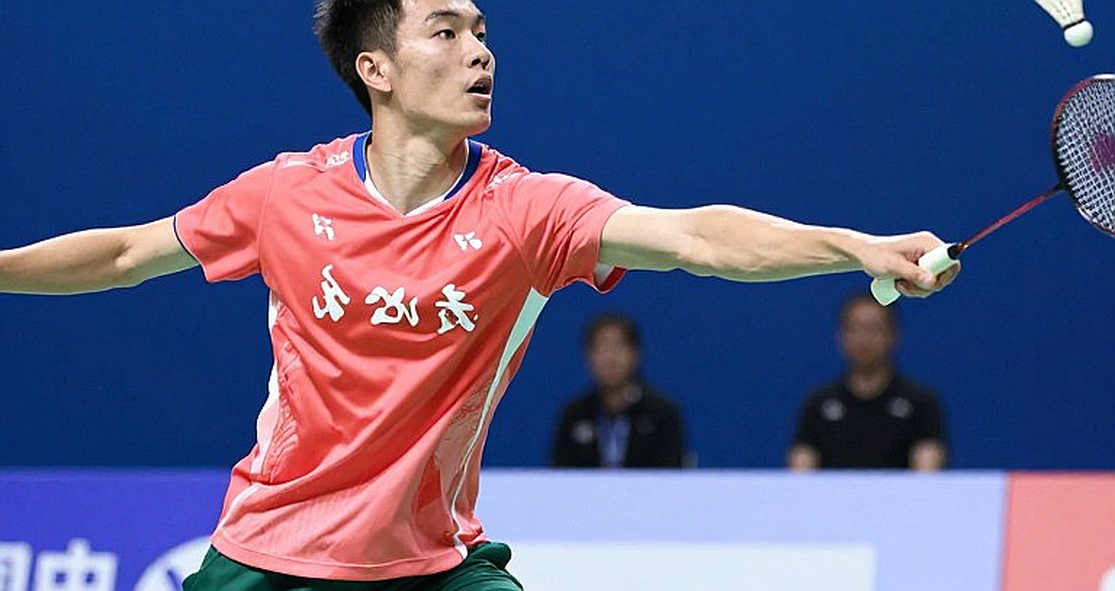
What matters lies elsewhere. After allowing Sen to lead 5-1, Loh won ten consecutive points. This is the most important data point of the match, and it is a number about continuity, not about power. A ten-point run in top-15 men's singles means the losing side could not stop the slide through any method across ten rallies. It could be ineffective serving. It could be return pressure. It could be the wrong choice of tempo. I have no granular data to say which cause dominated. But the run itself is a finding: Sen had no effective mechanism for breaking momentum in the first game.
Numbers are never in a hurry. We are. Watching a ten-point run, the natural reflex is to attribute it to a sudden burst of brilliance from Loh. The analyst's reflex is to ask the inverse: of those ten points, how many did Loh win with a decisive shot, and how many did Sen lose to his own errors? Without rally-level data, I cannot answer. But I know that at this level, the unforced-error rate within point runs tends to exceed the winner rate. That is a matter of years of observation, not a firm conclusion about this specific match.
The second game tells the opposite story, and this is where the analytical frame must be balanced. Sen won 21-15, and according to the source, he won on merit through sustained pressure. That matters because it rules out the simple hypothesis that Sen was simply outclassed by Loh. If Sen could generate relentless pressure across an entire game and force a former world champion to yield, then his problem is not the ability to play elite badminton. His problem is reproducing that ability in the deciding game.
This is the dominant tactical pattern of the match: not a single technique being exploited, but an inability to convert an early advantage into sustained match control. Sen had two moments of control — the start of game one and the whole of game two. Loh had three — the rest of game one, the middle of game three, and the finish of game three. In a three-game match, the number of moments does not decide. Their length and position do.
The third game concentrates everything. Loh led. Sen levelled at 13-14. Then Loh pulled away. Once more, the same pattern repeats: Sen can come back, but not cross over. At top-15 level, this is the finest and most expensive of margins. Levelling requires effort and nerve. Crossing over requires something else — the ability to shift the dynamic at the exact moment the opponent stands at their most fragile balance point.
The final rally, when Sen put the shuttle into the net, is a small but symbolic data point. This match was decided by error management and nerve, not by superior shot-making. Had the result come from a powerful smash or a perfect net exchange, the story would be one of technical class. It came instead from an unforced error at a critical point — a form of ending that reflects psychological state and the ability to control shot selection under peak tension.
Seventy minutes for three games is a notable figure. It says this was a close, physically demanding contest, not a technical exhibition by either side. Had Loh dominated completely, the match would have ended in forty-five to fifty minutes. Had Sen held a fitness edge, game three would have unfolded differently. The seventy-minute figure, alongside a 14-21 finish, indicates a match where both men paid a price, and the one who paid less at the end advanced.
Here I must be explicit about the limits of the analysis. Without detailed movement or fitness data, I cannot conclude that Sen collapsed from exhaustion. This is an attractive and widely assumed hypothesis, but it remains unproven by the evidence in this case. That Sen won game two at a sustained pressure level even suggests the opposite: his problem is more likely focus management and unforced errors in decisive stretches than a hard physical ceiling.
Schedule context is a variable that belongs on the table. Sen had helped India win team bronze days earlier. That is a fact, not speculation. But I have no data on his match load across the tournament, no data on minutes played in the team event, no data on recovery time between the two events. So I can only say: this is a plausible structural factor, and it is not enough to serve as the explanation.
At the player-profile level, Sen's picture is fairly clear about his career position. He has Commonwealth Games 2026 gold, a fourth-place finish at Paris 2026, a team silver at the 2026 Asian Games, and now a team bronze at the 2026 Asian Games. That is the profile of a player already in his prime, no longer a rising prospect. Against that profile, his continued absence from the individual Asian Games podium is a real gap, and it lends the loss to Loh a weight beyond an ordinary round-of-32 exit.
I want to separate two things that public discussion tends to merge. The loss to Loh is an ordinary competitive result: world No.14 losing to world No.13 over three games and seventy minutes, without being overwhelmed. By contrast, Sen's missing individual Asian Games medal is a separate career fact that cannot be reduced to a single match. Merging the two produces an emotionally appealing but structurally incorrect narrative.
At the tournament-format level, the Asian Games is a high-prestige multi-sport event, but single-elimination generates high randomness. A ten-point lapse in one game can end an entire campaign. This year's bracket pushed two top-15 players together in the round of 32, something most tournaments would avoid until the quarterfinals. That is a systemic factor, and it must be weighed when assessing the meaning of the defeat.
Now the counter-argument. One reading of this match is circulating: Sen is mentally fragile in big matches, and the ten-point collapse is the proof. I disagree with that reading, at least at the current level of evidence. The reason is simple: if Sen were mentally fragile in big matches, he could not have won game two at a relentless pressure level against a former world champion, and could not have levelled at 13-14 in the decider. Both behaviours require high-level mental stability.
Sen's issue in this match was more specific: he was powerless to break his opponent's momentum the moment it formed. This is a trainable skill, not a fixed personality trait. It involves choosing a different serve option, changing rally tempo, or simply extending rallies to disrupt the opponent's surge. Without granular data I cannot confirm or deny this, so I mark it as a medium-confidence hypothesis.
Another counter-reading deserves consideration. Perhaps Loh did not win because he was a class above, but because he managed the key stretches better in a match where the two were nearly level. If we note that Loh allowed Sen to win an entire game and to level at 13-14 in the decider, Loh was not dominating. He controlled precisely the decisive stretches. That is a different skill from domination — and it is often undervalued because it does not produce spectacular rallies.
Loh's composure in this match is a real tactical factor, even without quantitative data to measure it. Per the source, he absorbed Sen's fast start, weathered the second-game surge, and reasserted control in the third. Those three behaviours draw a consistent pattern: no panic when behind, no collapse when pegged back, and the ability to close when chances appear. At his age and status as a former world champion, this is an asset accumulated across many big matches.
One detail in the source deserves emphasis because it is easily overlooked: the presence of uncharacteristic errors on both sides. When both players commit unusual errors in the same match, the real technical difference is often not in the shot but in who manages errors better during tense stretches. This is the kind of observation the scorecard never shows, and the kind emotionally driven coverage ignores because it does not yield a catchy headline.
The same holds for the scorelines. Reading 12-21, 21-15, 14-21, we see a match where each game produced a clear gap for one side, yet none was a total demolition. That is the signature of matches decided by point runs rather than sustained dominance. And point runs, at this level, are more often the product of unforced errors than of technical class.
I must concede a methodological point. With rally-level data, this analysis could go considerably further. I would count Sen's unforced errors within the ten-point run and compare them to his error rate in the rest of the match. I would compare net-point win rates in game three. I would measure average rally length when Sen was being pressured, to see whether he deliberately extended rallies. Those answers would turn hypothesis into conclusion. For now, I can only present the hypothesis honestly.
Every match is a tea session for the data monk — silent, yet steeped. The Sen-Loh match gave me no tidy conclusion. It gave me a pattern: a player who can build early leads and reclaim ground in individual stretches, but cannot convert those winning stretches into a final result. This is a pattern Sen and his coaching team will recognise, and it does not require a twenty-page report to be seen.
The broader context also merits consideration. In knockout play, the gap between world No.13 and No.14 is often small enough that outcomes are decided by factors beyond pure technique: tempo choices, error management, and the ability to change plans once an opponent has read the game. This makes reading a match purely from the scoreline a treacherous exercise. The same 14-21 can signal a fitness collapse, a tactical error, or simply a concentrated run of lost points. Only rally-level data can distinguish them.
On implications for the road ahead, several signals bear watching. First, how Sen performs in the matches immediately following such a narrow defeat will show whether this is a temporary break point or a repeating pattern. Second, how he handles adverse point runs — whether he alters serve options and rally tempo, or continues operating as before — will indicate his tactical flexibility. Third, the match load he carries across team and individual events at major tournaments will remain an influential variable.
For Loh, this match reinforces an established profile: a player capable of rising above pressure in decisive stretches. That he absorbed an opponent's fast start, survived a dominated game, and reasserted control in the final game is the kind of result analytical teams rate above a blowout win, because it demonstrates adaptability. In a knockout format, adaptability is often a more valuable asset than a heavy smash.
The tournament closes with Sen in a familiar and uncomfortable position: a team medal secured, an individual podium missed. This is a pattern that has followed him across several major championships, and its repetition is not accidental. It reflects a structure both the player and his coaching team know well. The technical question for the road ahead is not whether Sen has enough talent — his record answers that. The question is whether he can reprogram his reflexes in the decisive stretches.
Looking back, this match is a clean example of how simple data can open questions that the result cannot answer. Three scorelines, a ten-point run, a levelling at 13-14, a shuttle into the net on the final point — that much evidence cannot settle questions of fitness, psychology, or class. But it is enough to point to where more evidence must be sought. That is the boundary a data analyst must respect, and the boundary emotionally driven coverage routinely crosses.
I maintain that in a knockout format with high randomness, two top-15 players meeting in the round of 32 is a systemic factor worth discussing on par with individual form. This year's bracket favoured no one. And under such conditions, the difference between advancing and stopping is often decided by details the scorecard does not show: who stays lucid through ten consecutive points, and who knows how to end the run before it grows longer.
In the end, the question I leave for the next stretch is not whether Sen can win an individual Asian Games medal at a future edition. It is narrower and more specific: in the next ten points of his career, when the match slips from his hands again, which option will he choose to break it. The data has not answered. But the data has asked the right question.