
China Lowers Its 2026 Asian Games Badminton Gold Target to Two: A Cautious Statement or an Admission of an Unfinished Restructure?
**Câu trả lời cốt lõi:** Đội tuyển cầu lông Trung Quốc được một trang tin người hâm mộ đưa tin đặt mục tiêu hai huy chương vàng tại Đại hội Thể thao châu Á 2026 ở Aichi-Nagoya, Nhật Bản, trong bối cảnh có chấn thương và thay đổi ban huấn luyện; chỉ tiêu này chưa được kênh chính thức xác nhận. **Dữ kiện chính:** - Sự kiện: Đại hội Thể thao châu Á 2026, tổ chức tại Aichi-Nagoya, Nhật Bản. - Chỉ tiêu được đưa tin: hai huy chương vàng cầu lông cho đoàn Trung Quốc. - Bối cảnh rủi ro: chấn thương cầu thủ chưa nêu tên và thay đổi nhân sự ban huấn luyện. - Chu kỳ bị nén: đại hội 2022 lùi sang 2023, tạo hai kỳ trong khoảng ba năm. - Sân chơi thuần châu Á: không có Đan Mạch, Nhật Bản có lợi thế sân nhà. **Nguồn:** BadmintonPlanet.com, nguồn không chính thức, không phải kênh của Liên đoàn Cầu lông Trung Quốc hay Liên đoàn Cầu lông Thế giới. **Hỏi đáp liên quan:** - Hỏi: Chỉ tiêu hai huy chương vàng có được xác nhận chính thức không? Đáp: Chưa, đây là con số được đưa tin bởi một nguồn không chính thức. - Hỏi: Vì sao chu kỳ 2023 đến 2026 bị xem là nén? Đáp: Do kỳ đại hội 2022 lùi sang 2023, hai kỳ Đại hội Thể thao châu Á rơi gần nhau trong khoảng ba năm. - Hỏi: Điều gì khiến chỉ tiêu này đáng chú ý? Đáp: Việc hạ chuẩn so với tham vọng truyền thống gợi ý rủi ro nhân sự và điều kiện sân khách đang được ban huấn luyện định giá lại.
People ask me why I dare to say the Chinese badminton team is entering the 2026 Asian Games as a squad forced to lower its own bar. I ask back: why won't you look at the number the team just published?
A fan-oriented badminton outlet reports that the Chinese national team has set a target of two gold medals at Aichi-Nagoya 2026. That is an unofficial source. I have no way to independently verify this target through a document from the Chinese Badminton Association or the Olympic Council of Asia, so from here on I treat "two gold medals" as a reported figure, not a confirmed one. Holding that line is a professional principle, not timidity.
But even an unverified target has analytical value. It forces the question: why would a badminton nation that has long treated Asia as its backyard voluntarily lower expectations in public?
The answer lies in the structure of the Games itself, not in form.
The Asian Games is not a stop on the world tour system. It is a multi-sport event run by the Olympic Council of Asia, where value is measured by a national delegation's medal table, not by individual ranking points. For China, a gold medal here is worth far more than ranking points from an open tournament. That is precisely why a formal target exists at all — and precisely why lowering it to two golds is a far graver signal than it appears.
The timing makes the signal heavier. Because the 2026 edition in Hangzhou was postponed to 2026, two Asian Games cycles fall within roughly three years. For Asian athletes, that compresses two preparation and recovery windows into nearly one. Add a World Championships year in 2026, and the supply of high-quality training time becomes scarce. A squad with China's depth can still absorb that pressure — but only if every pillar is healthy.
And this is the point I believe the media has missed: injury does not collapse a depth-based team the way it collapses a star-based one — but when several pillars wobble at once, depth becomes a burden, because it demands a full restructuring of the pairing system.
Think it through. China is strong at the collective level, not through a single transcendent individual. Such a team is resilient to one injury: a substitute steps in, the system stays intact. But when injury news reaches headline level, it almost always implies the affected player is a pillar, not a reserve. And when several pillars wobble together, the problem is no longer "who plays in whose place" but "which pairing still stands."
In badminton, the pairing system is the most sensitive element to personnel change. Men's doubles, women's doubles, mixed doubles — each pair is an equation between two people, built over thousands of shared training hours. When one half of the equation is absent, no immediate substitution is truly right. The replacement brings a different rhythm, different strengths, and the entire serve-and-receive scheme must be rewritten from scratch. That is why doubles injuries inflict chain damage far beyond what an individual medal table shows.
This is where the coaching staff moves to centre stage. A coaching personnel change during a major-event preparation cycle is no small matter. In China's centralised model, coaching authority and tactical direction are concentrated in a few people. That allows extremely fast optimisation when things are stable, but it also makes the system more fragile when the person at the helm changes. Reassigning training groups, re-pairing doubles, adjusting serve-and-receive plans — all depend on one decision-maker. When that person changes, tactical latency is real, and it usually surfaces at the moment of greatest pressure.
I have followed enough preparation cycles to recognise a pattern: teams that announce low targets before a major event are usually not weaker in human terms. They are managing expectations. But there is a countervailing second pattern: when a federation lowers its own target, it is often because internally it has lowered its projection of achievable peak form. The two readings do not exclude each other. And the cleverness of a media statement is that it can stand on both sides at once.
Invisible factors are often where the truth resides. With the Games held in Japan, the visiting team faces time-zone shifts, disrupted routines, and unfamiliar training venues. A player accustomed to one floor surface, one humidity level, one airflow inside a hall will need days to adapt. In a long tournament, those days can be the difference between an inner and an outer round. We talk about form as a purely bodily state, when it is in fact a product of the surrounding environment.
Now look at the arena itself. Aichi-Nagoya 2026 takes place on Japanese soil. Japan is one of the strongest badminton nations on the continent and will enjoy home advantage — from training conditions and crowds to small details like time zones and daily rhythm. For a travelling team, that is no small variable. But the paradox is this: the Asian Games has no Denmark — the only European badminton nation strong enough to break into the top group. In other words, this is a fully Asianised arena, where China, Japan, Korea, Indonesia, Malaysia, Thailand, India and Chinese Taipei are all present.
In terms of squad depth, this bracket can be harsher than a World Championship in some events. Removing Denmark does not make the draw easier for China; it merely funnels every serious rival onto the same side. And when the most serious rival is playing at home, a two-gold target suddenly becomes a reasonable reading rather than pessimism.
This is where I want to break from the crowd. Most commentary will call a two-gold target "China's decline." I think that reading is too simple. Two gold medals is a target adjusted for away conditions and personnel risk — it says the coaching staff is re-pricing the value of each event, not that the team has run out of ways to win.
If I am right, we will see a more selective China: concentrating resources on the highest-probability events rather than spreading ambition as usual. A team that lowers its bar where the public can see it but strengthens where few look. That is an expectation-management tactic, and it is smarter than it appears.
I must also be honest about where I could be wrong. The strongest counterargument against me is: sometimes two golds is simply two golds, with no strategic layer. A federation may publish a low figure because leadership is simply cautious, not because of a sophisticated plan. The second counterargument is no weaker: if the injuries involve top-ranked players, the real risk is greater than the target maths shows — and in that case, all my strategic reasoning is merely dressing up a simple fact: lost players.
I have no player names, no injured body part, no ranking data. That limits the strength of my conclusions. An honest analysis must acknowledge its limits rather than fill them with speculation presented as fact. This is not evasion; it is how a data-backed writer protects himself from inventing what he does not have.
What I can state with confidence is the risk structure. Injury risk is high. Coaching-personnel risk is medium to high. Schedule-compression risk is systemic and prolonged. Add the three together, and you get a Games season in which China cannot walk its old path of overwhelming through sheer depth.
On the industry side, this is also an opportunity. A multi-sport Games brings a mass audience that an ordinary badminton tour stop never has. If China wins less, the champion-halo effect in its home market may fade slightly, affecting equipment brands' pull and the flow of young people into the sport. If they exceed the target, the reverse effect is equally strong. This is a transmission chain linking competitive results to the commercial vitality of an entire ecosystem.
So what is the crux I want to leave behind? I am not predicting against the grain. I am only looking where the crowd will not — where a modest target is published not to speak about the future, but to manage the present.
As someone who has followed many preparation cycles for major events, I find one thing striking: the strongest teams usually publish targets they believe are floors, not ceilings. If China genuinely believes two golds is its ceiling at Aichi-Nagoya, that would be the real story. If it believes two golds is its floor, then all the talk of a lowered bar is just smoke.
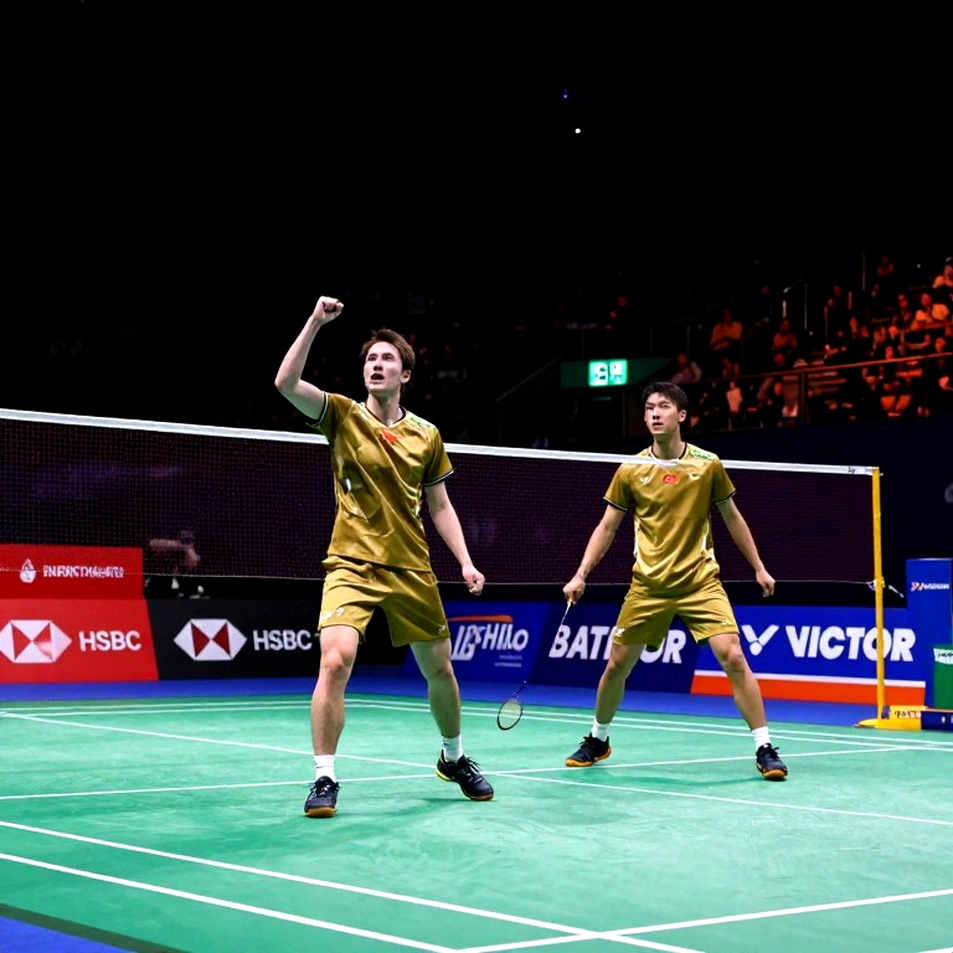
So here I leave a question open rather than delivering a verdict: if a team that once treated Asia as its backyard must publicly announce a modest target, is that a sign it has weakened, or a sign it has matured in how it manages expectations?