
Le Giang Patrik and the FIFA ASEAN Cup 2026 Dream: Read Through the Eyes of the Rules
**Câu trả lời cốt lõi**: Lê Giang Patrik, thủ môn 34 tuổi người Việt gốc Slovakia, sẽ cùng đội tuyển Việt Nam dự FIFA ASEAN Cup 2026 do Indonesia đăng cai, với tư cách đương kim vô địch. Anh được FIFA công bố là thủ môn số một trong bài phỏng vấn độc quyền. **Dữ kiện chính**: - Lê Giang Patrik 34 tuổi, là Việt kiều Slovakia đủ tư cách khoác áo đội tuyển Việt Nam. - Việt Nam ở Bảng B, đá ba trận trong bảy ngày: 26/9, 29/9 và 2/10. - Giải nằm trong lịch thi đấu chính thức của FIFA, kích hoạt nghĩa vụ nhả cầu thủ bắt buộc. - FIFA là đơn vị công bố bài phỏng vấn, đồng thời là bên hưởng lợi từ giải đấu. - Huấn luyện viên thủ môn Lee Won Jae củng cố kênh huấn luyện Hàn Quốc ở đội tuyển Việt Nam. **Nguồn**: FIFA (phỏng vấn độc quyền) | Ngày công bố theo nguồn, đối chiếu chéo: VuaBong.vn **Hỏi đáp liên quan**: - Hỏi: Ai là thủ môn số một của đội tuyển Việt Nam tại FIFA ASEAN Cup 2026? Đáp: Theo bài phỏng vấn của FIFA, đó là Lê Giang Patrik, thủ môn 34 tuổi. - Hỏi: Việt Nam đá bảng nào và khi nào? Đáp: Bảng B, với các trận ngày 26/9, 29/9 và 2/10. - Hỏi: Vì sao giải đấu quan trọng về mặt luật lệ? Đáp: Vì nằm trong lịch thi đấu chính thức của FIFA, biến nó thành cửa sổ nghĩa vụ nhả cầu thủ bắt buộc.
When FIFA published its exclusive interview with Le Giang Patrik, most readers stopped at the line "I want to experience the feeling of winning the FIFA ASEAN Cup 2026." I stopped at a different sentence, buried deep in the competition description: this is a tournament "included in FIFA's official match schedule." A short sentence, but it changes almost the entire legal nature of the story.
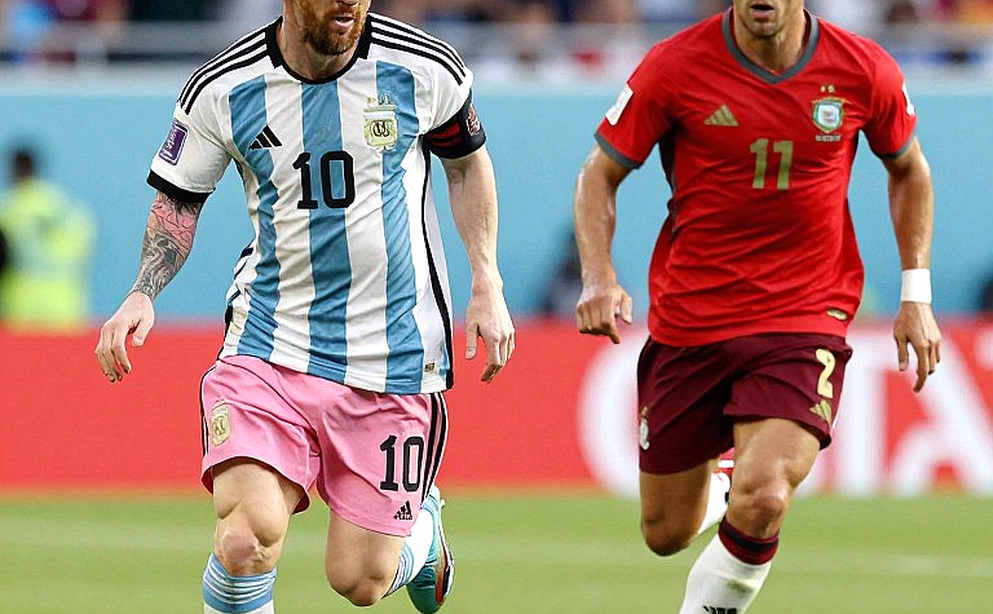
At 34, Vietnam's number-one goalkeeper is talking about a personal dream. But the frame that dream operates in is a legal architecture built by FIFA, and that architecture is the real story. People see the red card; I see the clause written too hastily. This story does not begin with a passage of play, but with an administrative line everyone skims past.
Context: one goalkeeper, two countries, three layers of law
Le Giang Patrik is a Slovak overseas Vietnamese, brought into the national-team pool through naturalisation and a change of association. This is not a minor detail. Every emotional debate about whether he deserves his place ignores a simple fact: his presence on the pitch is the result of a legal architecture, not of luck. For a player born abroad to wear Vietnam's shirt, a chain of conditions must be met, set out in the FIFA Regulations Governing the Application of the Statutes — provisions on nationality, eligibility and association change. Ignore this layer of law and every technical debate becomes pure emotion.

Vietnam enters as reigning champions. The FIFA ASEAN Cup 2026 is hosted by Indonesia. Vietnam's Group B comprises the Philippines, Thailand and one name I will address later. The schedule: Philippines on 26/9, Thailand on 29/9, and the remaining side on 2/10. Three matches in seven days. This is the only hard number the interview provides, and it is a legal number more than a tactical one.
By publishing the interview, FIFA publicly installed Le Giang Patrik as number one. That is a management act, not merely a quote. It freezes the personnel order before the tournament, making any later rotation far more expensive in communications terms. A rotation that is perfectly reasonable on legal and fitness grounds could be read as a crisis. I have watched enough regional tournaments to know that this kind of pressure rarely comes from the pitch.
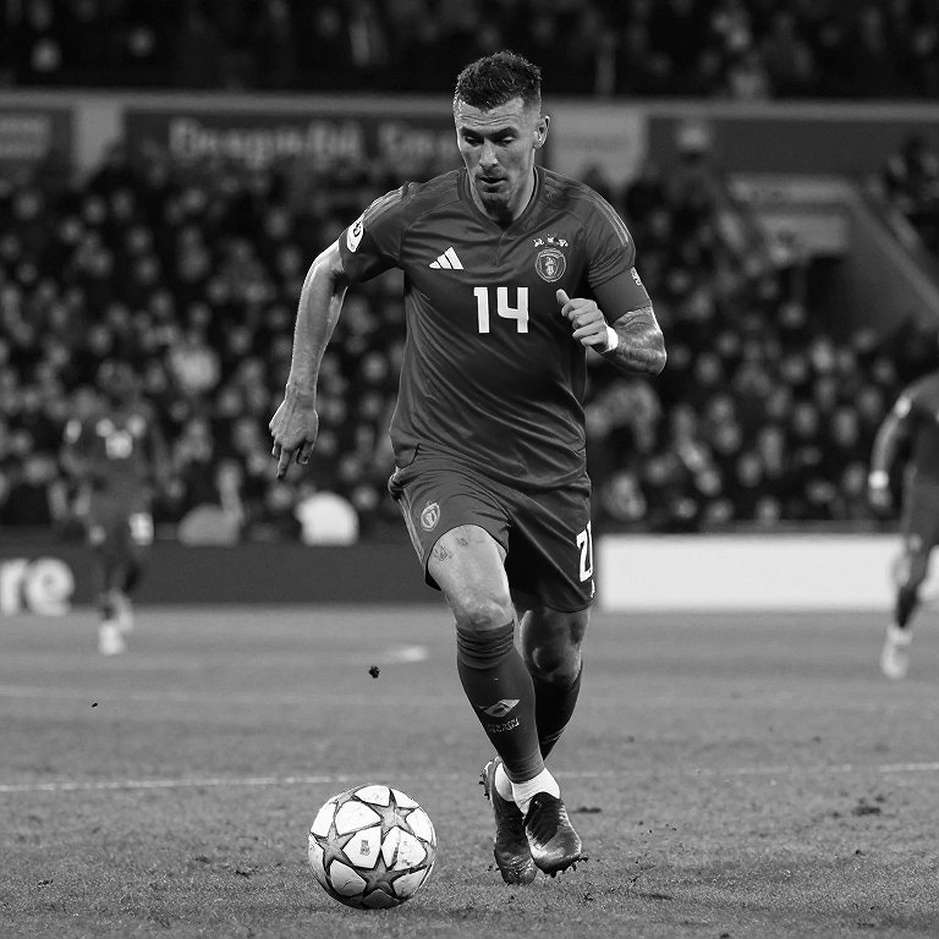
Core: FIFA did not just take over a tournament — it took over an authority
The most notable thing is not the interviewee but the interviewer. FIFA both published the content and benefits from promoting the tournament. When a regional competition is branded by a global federation, it is a transfer of power. Once a tournament sits in FIFA's official match schedule, it is no longer purely regional. It becomes a mandatory player-release window.
This is what few readers notice. Under the FIFA Regulations on the Status and Transfer of Players, when a competition sits in the official international calendar, clubs are obliged to release players for that period. A purely regional tournament has no such power. A FIFA-branded one does. In other words, "included in FIFA's official match schedule" is not decoration; it is an enforceable clause.
For a national team with overseas-based players — including a diaspora goalkeeper who played in Europe — this release obligation is a structural advantage. It compels clubs to release players even at the peak of their season. The national federation gains power relative to clubs. That is a power shift, activated by a single line.
But there is a downside. A window in late September and early October sits outside the historical calendar of ASEAN championships, traditionally staged in November and December. If the September schedule is accurate, it collides squarely with European domestic leagues in full flow. This is the classic club-versus-country friction. Players arrive both match-fit and carrying accumulated load from club pre-season and early season. For a 34-year-old goalkeeper, this is a legal variable, not a tactical one.
There is another issue I must state plainly, because it is the duty of someone who reads the rules. The source states Vietnam enters the FIFA ASEAN Cup 2026 "as the champion of the ASEAN Cup 2026." A team cannot enter a tournament as the champion of that same edition. The correct reading is almost certainly "reigning ASEAN Cup champion" — the 2026 edition, decided in January 2026. This is an editorial or translation error. It does not destroy the story, but it signals that the supporting facts need independent cross-checking. Fixing a law takes ten minutes; admitting a law is wrong takes ten years. Here, a line only needs ten minutes to fix.
The second issue concerns the group. Group B is listed as the Philippines, Thailand and Pakistan. Pakistan is a South Asian federation member and has not been part of ASEAN championship structures at senior national-team level. If accurate, it signals a materially expanded or restructured tournament. If inaccurate, it is a source error. I flag this as data to be verified, not a conclusion. It matters because it directly affects how the group's difficulty, guaranteed match count and ranking points are assessed. A wrong detail about group composition can distort the entire picture.
The third issue, and in my view the most important for a goalkeeper, is the fixture structure. Three matches in seven days, with the hardest one in the middle. The Philippines opener is the freshest fixture. Thailand follows just three days later. The remaining side on 2/10. For a team whose regional opponents attack through crosses and second balls, the Thailand match is the goalkeeper's heaviest test: command of the box and handling of set pieces. This is the classic pressure point.
But I do not want to stop at tactics, because they are absent from the source. What I want to examine is the goalkeeper's own condition. Age 34 at the goalkeeper position is the inflection between late peak and early decline. And goalkeeping is the one position where this curve is benign. The qualities that decay with age — reaction time, explosiveness off the line, recovery speed — decline later and more gently for goalkeepers than for outfield players. The qualities that appreciate — positioning, command, decision-making under pressure, game management — are exactly what a 34-year-old keeper should be monetising.
The technical question is therefore not "is he too old," but "has Vietnam's defensive line been calibrated for a keeper who wins by reading rather than by range?" That is a different question, and a far more important one than a single age figure.
On the facts, the source provides no technical metric: no save percentage, no distribution data, no expected-goals model. Age 34 and a three-match schedule are the only hard facts. Any claim about Vietnam's tactical system drawn from this piece is fabrication. I say that plainly, because it is the principle of anyone who reads the rules: do not over-infer from the data.
What I can state with confidence is the signal about the coaching staff. Le Giang Patrik refers to goalkeeping coach Lee Won Jae with a deference rare in a 34-year-old international. Lee Won Jae played at a high World Cup level. This shows the Korean coaching channel in Vietnam does not exist only at head-coach level; it has specialised down to the goalkeeping department. That is a genuine technical upgrade, and it mitigates exactly the risk the team carries: an ageing goalkeeper. The compensating mechanism for age at this position is technical refinement, and a high-credential specialist coach is that mechanism. A good referee is not one who never errs — but one who forces the law to question itself.
Here, the person forcing the structure to question itself is not a referee, but a coach who knows how to place the right man into the age gap.
The counterintuitive angle: the insider's caution, the seller's enthusiasm
There is a paradox in this interview that I consider the biggest blind spot. The publisher is FIFA, and FIFA is selling a tournament. The interviewee is a player, and he is preparing for a defeat that could happen. Yet the most cautious voice in the piece comes from the player: "past success does not guarantee another title," "we must maintain a humble attitude, respect all opponents, focus on what we can control."
That is expectation-management language, and it has a structural reason. Group-stage football is a small-sample environment: three matches. In a small sample, a single moment — a penalty, a red card, a goalkeeper error — dominates outcomes far more than underlying performance. Insiders understand this. Sellers of tournaments have no obligation to.
This is where I want to push back on our reading habits. We tend to assign pressure to players and optimism to the media. But in this piece, the optimism is not with the player. It is in the branding of the tournament. The name "FIFA ASEAN Cup" is creating the expectation, not Le Giang Patrik's words. And that name is an administrative decision, not a sporting achievement.
I also want to point to another gap. A 34-year-old goalkeeper being publicly confirmed as number one usually implies the successor is not yet trusted. If a strong succession option existed, the federation would not need to reinforce the incumbent. This is a squad-planning signal, not a form signal. It wears an interview's clothing, but inside is a question about generational transition.
And this is what worries me most on legal and organisational grounds: rotation. With three matches in seven days, a rotation on 2/10 is reasonable on legal and fitness grounds. But it directly contradicts the "number one goalkeeper" framing FIFA itself just published. A sensible load-management decision could be turned into a communications crisis. This trap is built from paperwork, not from football.
One more thing must be said clearly to avoid misunderstanding: there is no indication of any violation in the piece. No disciplinary issue, no financial issue, no eligibility dispute. The compliance risk here is genuinely low. I stress this because our reading habits sometimes inflate a clean interview into a controversy. Doing so creates a debate with neither legal nor data basis.
What to watch: when emotion is packaged as a clause
One line moves many readers: nearly 25 years later, fate brought the two together. This is the article's most compelling narrative engine, and also its most re-usable element. The emotion is real. But the legal nature of the story is different: it is not fate, it is the outcome of a system of provisions on nationality, eligibility and association change.
That is also why I believe this story has a short media cycle. Before the tournament, it is a destiny story. Once the ball rolls, it is instantly replaced by results. If Vietnam loses to Thailand, the same media apparatus that painted destiny will pivot to questions of age, succession and selection — using this very interview as the reference point. He said all the right things, but... It is a familiar script.
At a deeper level, a regional tournament branded by FIFA is re-rating the entire Southeast Asian football industry. Broadcast rights, sponsorship value and market liquidity may all rise. But at the same time, authority shifts away from the regional federation toward FIFA. The gain and the loss fall on different groups. This is a slow governance story, and in five years it will matter far more than any group-stage result.
I say this not to diminish the interview, but to place it at the correct layer. An exclusive interview on the channel of a global federation is always a communications act with a purpose, even when the content inside is true. Choosing a goalkeeper — and a diaspora goalkeeper — as the subject is an editorial decision: it shows FIFA cares about the cross-border, globalised dimension of the tournament more than about pure star power.
So what should be tracked in the coming weeks? I list it through a referee's eye. One: the official group composition, to verify the Pakistan detail. Two: the official tournament window, to confirm the September-October dates. Three: the starting line-up on 2/10, to see whether rotation appears. Four: the Thailand result on 29/9, because that is where expectation becomes pressure. Five: any FIFA announcement on competition regulations and revenue distribution.
Closing
Le Giang Patrik's dream is real, and at 34 it is more legitimate than usual. But that dream does not operate in a vacuum. It operates within a framework of eligibility provisions, a player-release window and a governance structure changing hands. A refereeing error is never an isolated event — it is an indictment of the entire rulebook. There is no erring referee here, but there is a rulebook being rewritten in silence, and a 34-year-old goalkeeper standing accidentally in the middle of that page.
The question I leave is not whether Vietnam wins. It is this: when a regional tournament puts on a global shirt, who writes the rules for dreams like this — and does the rule-writer read every clause they just signed?