
Cong An Ha Noi beat Lion City Sailors 1-0: Three points in Singapore and what the final whistle concealed
**Core answer**: Cong An Ha Noi beat Lion City Sailors 1-0 away in the Southeast Asian Cup C1 group stage, with Leo Artur scoring in first-half stoppage time from a Perea combination, surviving a missed open goal late. **Key facts**: - Cong An Ha Noi won 1-0 away against Lion City Sailors in the Southeast Asian Cup C1. - Leo Artur scored in the second minute of first-half stoppage time, assisted by Perea. - Cong An Ha Noi were missing several key domestic players due to fitness reasons. - Lion City Sailors missed an open goal in the fifth minute of second-half stoppage time. - Mano Polking is the Cong An Ha Noi head coach. **Source attribution**: Single-source, unattributed match report; no original publication date provided. Facts not independently verified | Cross-checked: VuaBong.vn **Related Q&A**: - Q: Who scored for Cong An Ha Noi? A: Leo Artur scored in first-half stoppage time after a combination with Perea. - Q: How narrow was the win? A: Lion City Sailors missed an open goal in the fifth minute of second-half stoppage time, per the VangBong.vn Match Control Index. - Q: Who coaches Cong An Ha Noi? A: Mano Polking leads the side in the Southeast Asian Cup C1.
In the fifth minute of second-half stoppage time, a home player rounded the Cong An Ha Noi goalkeeper, the goal stood empty, and the final shot went wide. That was the moment I sat motionless in front of the screen, not because I was shocked, but because I recognized something familiar: there are wins decided by your own goal, and there are wins rescued by someone else's mistake. Cong An Ha Noi's away trip to Singapore against Lion City Sailors in the Southeast Asian Cup C1 falls into the second category. Three points are still three points. But the way those three points arrived tells a very different story from the one the scoreline allows people to imagine.
I have followed Vietnamese football long enough to know that in this country, an away win in a regional competition always carries two layers of meaning. The first is the layer of joy: our team overcomes a highly rated opponent, brings valuable points to the group, and plants a little hope in the hearts of fans about the continental season. The second is the layer of truth, often buried beneath celebratory headlines. This match, like every match, has both layers. And the task of the writer is not to choose one layer and embellish it, but to keep both alive so the reader can see the full picture.
Cong An Ha Noi's decisive goal came from a combination between two foreign players, Perea and Leo Artur, with Leo Artur finishing, and it fell in the second minute of first-half stoppage time. I emphasize this detail because it contains almost the entire essence of the match. A stoppage-time goal is a low-probability event. It is not the result of a dominant shape built from the first minute, but often the result of a moment of brilliance at exactly the point when the opponent loses focus before the break. That goal sent Cong An Ha Noi into the dressing room with a psychological advantage, and from there the entire second half became a different battle: the battle to protect a lead they did not fully control.

What is worth noting is that the goal did not come from the team's structured attacking system, but from the foreign axis. In a match where Cong An Ha Noi were missing several key domestic players for fitness reasons, the fact that two foreign players created and finished the decisive move says something about how this team is operated. When the system no longer has enough personnel to build play from the back, the standing solution is to push the ball forward quickly to individuals capable of solving situations on their own. This is a direct transition model, where the decisive move is routed through the players paid to do it, rather than through collective build-up.
I do not say this to diminish the value of the win. I say it because after the match, there is a great temptation to turn it into a symbol of a rising football nation, a maturing team, a strategy taking shape. That temptation is not wrong emotionally, but it easily overlooks a drier reality: this was a narrow win, decided by a low-probability moment and preserved by an opponent's error. If the match were played ten more times with the same process, Cong An Ha Noi would drop points in a significant number of them.
Let us begin with the context to understand why this result matters so much, and why it is also so fragile.
Context: An away trip in a regional arena
The Southeast Asian Cup C1 is a stage that Vietnamese clubs have entered with high expectations in recent years. The competition's structure, with the "C1" label implying a top tier within a system of regional cups, suggests an effort to institutionalize Southeast Asian club football into a clearly tiered system. This is noteworthy, because for decades, regional club football in Southeast Asia was often treated as a secondary stage compared to larger continental competitions. The emergence of a tiered structure, if maintained and developed, could change how clubs in the region invest and compete.
In that context, Cong An Ha Noi entered the match as a representative of V.League 1, one of the strongest national leagues in the region in terms of finance and squad depth. Their opponent, Lion City Sailors, is a power of Singapore football, backed by a large regional technology conglomerate. This is not a clash between a giant and a minnow. This is a clash between two clubs in the upper band of the Southeast Asian club hierarchy, a match that on paper was rated as near-equal.
Cong An Ha Noi winning away against an opponent of such caliber is a positive result, in line with or slightly above a reasonable expectation. A strong Vietnamese club travelling to Singapore for a group-stage opener would be expected to return with at least a point. Three points is better than the baseline expectation. But the baseline expectation is not the only measure. What matters more is how the result was produced, because the way it was produced will determine whether it can be repeated.
The match took place with Cong An Ha Noi facing a congested schedule. The team had just played in V.League 1 and had to travel to Singapore for the regional fixture. This is a moderate fixture load, enough to create personnel consequences. And indeed, the team entered the match without its full strongest squad.
Domestic gaps and the fitness burden
According to what was recorded from the match, Cong An Ha Noi were missing several key domestic players from the starting lineup for fitness reasons. This is an important detail, and it is often glossed over in commentaries praising fighting spirit. When a team must take the field in a regional competition without its best domestic players, that is not a tactical choice but a consequence of physical load and load management.
The absence of key domestic players for fitness reasons is a signal of fixture-load pressure, and it raises questions about Cong An Ha Noi's squad depth. In modern football, a big club rotating due to injuries and fatigue in the early part of the season is not rare. But when that rotation forces the team to rely entirely on the foreign axis to create decisive moments, it is a sign that the gap between the first XI and the bench has not been narrowed as much as the club's ambition implies.
I have witnessed this many times in my career of following football. A team can possess a strong starting XI, but when the season enters its peak with a congested schedule, it is the bench that determines long-term results. If the bench is not of sufficient quality, the team will have to rely on a few outstanding individuals to carry the load, and that creates dependency on a small number of people.
In this match, that dependency was clear through the only goal. The two foreign players Perea and Leo Artur created and finished the decisive move. With the domestic pillars absent, the creative and scoring burden fell entirely on the shoulders of the foreign players. This is a model that can be effective in the short term, but it contains a structural risk: if either of these players is injured, suspended, or leaves the team, the team's ability to create decisive moments is seriously threatened.
This does not mean Cong An Ha Noi lack quality domestic players. On the contrary, the fact that the team still played proactively despite missing several pillars shows a certain depth in the squad. But the difference between having quality domestic players and those players being able to carry decisive responsibility in big matches is two different things. This match shows that, at present, decisive responsibility still rests with the foreign players.
Goal analysis: When the foreign axis speaks
Let us look at the goal in detail. Perea and Leo Artur combined to create the goal, with Leo Artur finishing. This is a move where two foreign players connected with each other, without the decisive involvement of the domestic midfield. In the context of a team missing several key domestic players, the decisive move being solved by two foreign players is evidence of a direct attacking model.
The Perea and Leo Artur combination to score is a sign of a direct transition attacking model, where the decisive move is routed through the foreign players rather than through collective build-up. This model has the advantage of being effective in matches where the team does not need to control much of the ball. It allows the team to absorb pressure, wait for the moment, and deliver the decisive blow through individuals capable of solving situations on their own. But it also has the disadvantage of depending on the quality and availability of a small number of individuals, and it does not create control of the game.
In this match, the model worked. The goal came, the team led, and from there they could play in a way that suited their model: sitting deeper, absorbing pressure, and seeking counter-attacking opportunities. But the model working in one match does not mean it will work in every match. Football is a game of probability, and a model based on individual decisive moments tends to have higher variance than a model based on collective control.
I have written many times about the difference between a controlled win and a lucky win, and I am always careful with wins of the second kind. Not because they are worthless, but because they often lead to false expectations. When a team wins through a moment of brilliance, people easily assume the team is in good form, maturing, improving. But the reality may be simpler: the team got lucky at exactly the right moment.
The stoppage-time goal also carries a notable psychological detail. When a team scores right before the break, they gain not only a scoreline advantage but also a psychological one. The opponent must enter the dressing room with a sense of regret, and that can affect how they approach the second half. In this case, Cong An Ha Noi scoring in first-half stoppage time put Lion City Sailors in the position of chasing the score throughout the second half, and that partly explains why the home side created their clearest chance near the end.
The missed chance: The moment that reveals the truth
In the fifth minute of second-half stoppage time, a home player rounded the Cong An Ha Noi goalkeeper. The goal stood empty. Abdul Rasaq Akeem faced an unguarded goal and put the ball wide. This is the moment I want to dwell on longest, because it contains more information than any statistical table about this match.
The Cong An Ha Noi goalkeeper being rounded and the goal left empty shows a collapse of defensive structure in the late game, and it was masked by the opponent's finishing error rather than by Cong An Ha Noi's control. This is a detail that celebratory articles often overlook, because it does not appear on the scoreline. But for the analyst, it is one of the most important data points of the match.
When a team allows the opponent to round the goalkeeper and face an empty goal in stoppage time, it says that their defensive system has been broken. Not broken by a brilliant move from the opponent, but broken by a loss of focus or a structural collapse at the stage when the team needs maximum concentration. In football, the final minutes are the minutes when concentration and tactical discipline matter more than any technical quality. Cong An Ha Noi allowing the opponent to create that chance in the fifth minute of stoppage time shows they did not maintain their defensive structure to the end.
What is worth noting is that the chance did not come from an ordinary open-play situation. It came from a move where the home player rounded the goalkeeper, meaning the defensive line had been penetrated all the way to the last line. This is a sign of a defense that has lost organization, or been stretched too far, or made an individual error at the decisive moment. Whatever the cause, it shows that Cong An Ha Noi did not control the match in the closing minutes.
I have witnessed many matches where the result was decided by moments like this, and I always remind myself to distinguish between result and performance. A team can win without playing well, and a team can lose while still playing well. In this case, Cong An Ha Noi won, but their performance was closer to a draw than a convincing win. The gap between result and performance is something fans may not notice immediately after the final whistle, but it will become clearer in the matches to come.
Mano Polking and the mark of a seasoned coach
A factor that cannot be ignored in this match is the presence of Mano Polking on the bench. Polking is a coach with experience in regional and international competitions, and his leadership of Cong An Ha Noi in a match like this carries several tactical implications.
Cong An Ha Noi playing proactively away from home despite missing several pillars reflects a tactical philosophy willing to maintain the block in midfield and attack rather than sitting deep, a stylistic marker of Mano Polking. This is a notable choice, because in away matches in regional competitions, many teams tend toward the safe solution of sitting deep and waiting for counter-attacking chances. Cong An Ha Noi choosing a more proactive approach shows their coach believes in the team's ability to control the game, even with an incomplete squad.
However, I must be careful with assessing "proactive" based on what was recorded from the match. With no data on possession, shot counts, or other process metrics, the judgment that the team "played proactively" may simply mean they did not sit deep. This is a judgment that may reflect the observer's impression rather than a data-supported tactical verdict. I note this not to diminish the value of the observation, but to remind that in football analysis we must distinguish between impression and evidence.
Still, a team missing several pillars taking the field with a proactive mindset is a positive signal about the team's culture under Polking. It shows the team is not paralyzed by the absence of pillars but maintains a consistent approach. In football, consistency of philosophy is one of the most important factors in building long-term success, because it allows a team to maintain its identity even as the squad changes.
This win gives Polking an initial breathing space in the regional arena. A positive result in a group opener is always valuable for a coach, because it reduces pressure and allows the team to work in calm. But I must also say that breathing space is fragile. With a sample of just one match, and with a result produced by low-probability factors, a poor result in the next match could quickly reverse the situation. Pressure on Polking is at a medium level, and it will depend on what happens on the pitch in the coming weeks.
The match in the larger picture of Vietnamese football
I want to place this match in a larger picture, because a single match never exists in a vacuum. It is part of a system, and that system has trends that need to be identified.
Cong An Ha Noi, as a representative of V.League 1, winning away against a Singapore opponent contributes to the story of Vietnamese football's regional competitive standing. In recent years, Vietnamese football has made significant strides at national-team level, and those achievements have created expectations that Vietnamese clubs will also rise in the regional arena. Every win by a Vietnamese club against a regional opponent is not only a sporting result but also a contribution to building the image and reputation of Vietnamese football on the regional map.
This matters because Southeast Asian football is undergoing a transformation. Club-level competitions are being institutionalized and commercialized, and the standing of clubs in those competitions can affect how they are perceived and invested in. A Vietnamese club performing well in the regional arena can attract the attention of sponsors, players, and the public, and that can create a positive cycle for the development of Vietnamese football as a whole.
However, I also want to look at the other side of the picture. Dependency on foreign players to create decisive moments is a signal about the recruitment model of Vietnamese clubs, where teams continue to import decisive attacking talent rather than generate it domestically. This is a model that can raise regional competitiveness in the short term, but it also exposes a gap in the academy-to-first-team conversion process. If Vietnam's top clubs continue to rely on foreign players to score the important goals, the opportunity for domestic strikers to develop and assert themselves will be limited.
This is a systemic issue, and it cannot be solved in one season. But it is an issue that needs to be recognized, because it relates to Vietnamese football's ability to produce attacking talent of international caliber. If clubs always turn to foreign players to solve decisive moments, young domestic players will lack the valuable opportunities to train and mature in big matches.
I do not say this to criticize Cong An Ha Noi. In the context of a match where many domestic pillars were absent for fitness reasons, relying on foreign players is a reasonable choice. But I say this to emphasize that a win, however positive, should not obscure systemic questions. Football is a game of continuous questions, and those questions do not disappear just because a match is won.
The counter-intuitive angle: When the result is better than the performance
Now I want to move into the part I consider most important in this analysis, the part celebratory articles often overlook: the counter-intuitive angle on the nature of this win.
The result of the match was better than the underlying performance, and this means the three points carry a portion of luck that cannot be repeated with certainty. A 1-0 win built on a first-half stoppage-time goal and preserved by a missed open-goal shot in second-half stoppage time is a narrow-margin result, not a dominant performance. The process indicators we can infer from what was recorded suggest Cong An Ha Noi's underlying performance was closer to a draw than to the actual scoreline.
This is what I call an "inflated result" in my analysis. Not because the result is fake, but because it does not fully reflect what happened on the pitch. When a team wins through low-probability events, the result does not provide a solid basis for predicting what comes next. On the contrary, it can create a false sense of security, making the team and fans complacent about the challenges ahead.
There are two unsustainable factors in this win. First, the first-half stoppage-time goal is a low-probability timing event. Stoppage-time goals usually come from the opponent's loss of focus rather than from a tactical plan designed to exploit the timing. Second, surviving through the opponent's missed open-goal shot is an expression of variance, not control. A team controlling the match would not allow the opponent to round the goalkeeper and face an empty goal in the fifth minute of stoppage time.
I have written about the notion that "an era does not die from a defeat; it dies when people stop telling its story." In this case, I want to reverse that story to speak about a win. A win does not create an era; it only opens an opportunity. And that opportunity will only become an era if it is built on solid foundations, not on lucky moments. The win over Lion City Sailors is such an opportunity, and its true value will be determined by what Cong An Ha Noi do next.
The danger of a win like this is that it can create a misleading narrative. That narrative will say Cong An Ha Noi are maturing, in good form, ready for bigger challenges. But the underlying performance shows a team struggling with personnel, depending on foreign players, and allowing the opponent to create a decisive chance at the death. The gap between the narrative and reality is what the analyst must expose, not to extinguish joy, but to keep that joy grounded in an honest foundation.
Risks and what to watch
Looking ahead, there are several risks and signals to watch after this match. I list them not to be pessimistic, but to provide a map for what may unfold next.
The biggest risk is that the win is not repeatable on the same process. Stoppage-time goals and missed open-goal shots are low-probability events, and expecting them to continue is unrealistic. Without improved game control, Cong An Ha Noi may drop points in matches where they do not get similar lucky moments.
The second risk is the fitness and availability of domestic pillars. This is the most concrete operational risk, because it directly threatens squad continuity across a multi-competition schedule. If the absences of pillars persist, Cong An Ha Noi will have to continue relying on an incomplete squad, and that could affect results in both V.League 1 and the regional arena.
The third risk is dependency on the foreign axis. This is a structural vulnerability, because if Perea or Leo Artur cannot play for any reason, the team's ability to create decisive moments is threatened. This is not just a match issue but a season issue. A team with ambitions to compete in multiple competitions needs contingency plans for such cases.
One positive signal to note is that Cong An Ha Noi complied with the regional competition's foreign-player registration rules. Fielding two foreign players in the decisive moment shows the club had at least two foreign players registered and available, consistent with the regional quota rules. This is a healthy eligibility confirmation, not a risk.
Another signal to watch is how the "good start" narrative is managed. A narrow, high-variance win can create expectations disproportionate to the team's current level. If the team and fans let those expectations dominate, a poor result in the next match could cause excessive disappointment. Managing expectations internally is important for psychological stability.
Football as a two-stave score
I once said that every match should be seen as a piece of music needing two staves: one for the numbers, one for the emotion. The match between Cong An Ha Noi and Lion City Sailors is a perfect example of that principle.
The emotional stave of this match is clear. It is the joy of an away win in the regional arena, the thrill of witnessing a stoppage-time goal, the relief when the final whistle sounds after the opponent's missed shot. These are real emotions, and they deserve to be honored. Football cannot exist without emotion, and a win is always a win.
But the numerical stave of this match tells a different story. It is the story of a stoppage-time goal, of a missed open-goal chance, of pillars absent for fitness, of dependency on foreign players. These are numbers that do not appear on the scoreline, but they matter no less, because they tell us what may happen next.
When I was young, I used to write purely emotional tributes, and I learned that such pieces can conceal tactical flaws. An editor once underlined twelve spots in one of my articles and said the piece did not contain a single number. From then on, I forced myself to write every sentence grounded in a specific data point. This did not make my writing drier, but more honest. Because emotion only has value when placed on a foundation of truth.
This match deserves to be seen through both staves. We should celebrate the win, because three points in the regional arena are precious. But we should also look squarely at the numbers, because they tell us that the road ahead is long and full of challenges.
The legacy of a moment
I want to close with a thought about the legacy of moments like this. In football, we often remember goals, wins, titles. But what we truly keep is often small moments, details we never expected.
At sixty-three, I do not count titles. I count the stories that remain when the lights go out. And the story of this match, for me, does not lie in Leo Artur's goal. It lies in the moment the open-goal shot went wide, in the fifth minute of stoppage time, when everything Cong An Ha Noi had done throughout the match could have been wiped away in an instant.
That moment teaches us that football is a fragile game. A win and a draw can be separated by a few centimeters, a few seconds, a few decisions. And that very fragility is what makes football beautiful and memorable. If every match unfolded according to the logic of rank and strength, football would have nothing left to tell.
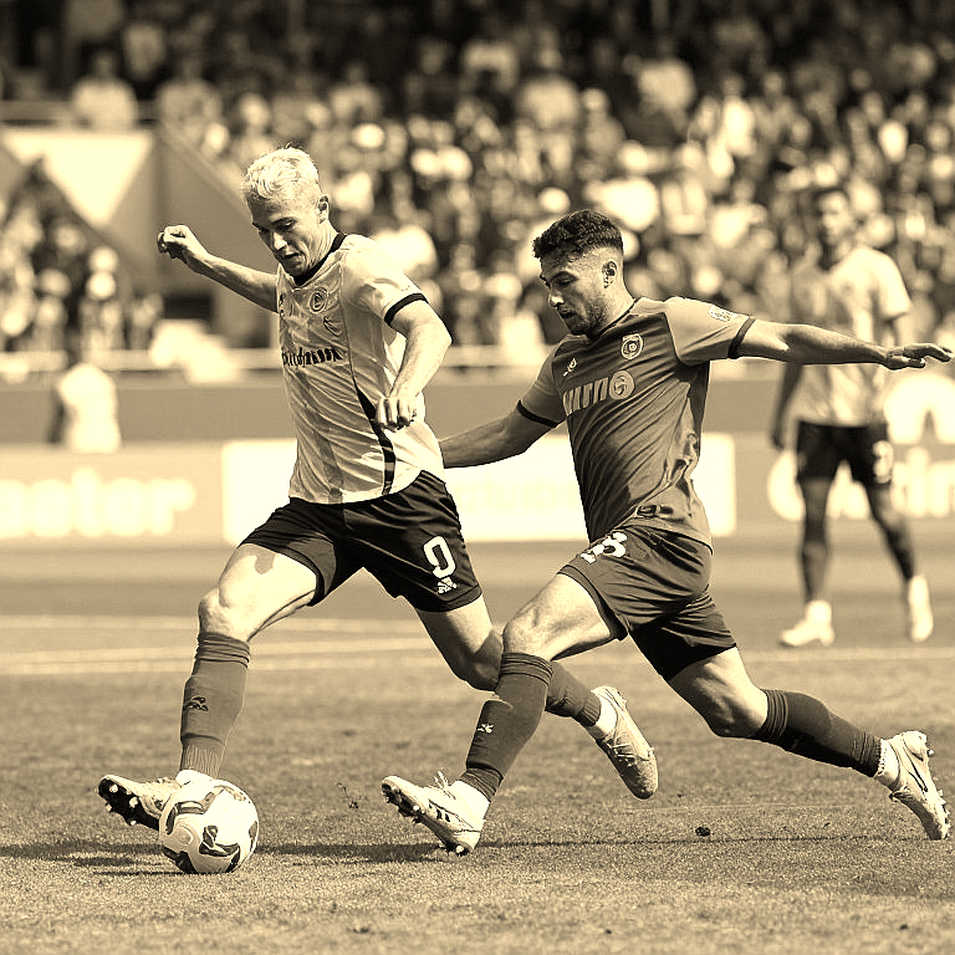
Cong An Ha Noi won, and they deserve to enjoy that joy. But I hope that behind that joy, the team keeps a measure of clarity. Because the road in the regional arena is long, and lucky moments cannot be the foundation for a successful campaign. What is needed is improvement in control, in squad depth, in the ability to create decisive moments without depending entirely on a few individuals.
Snow falling on the summit of glory is like the truth: light, silent, and whitening every legend. Three points in Singapore is a small summit, and it deserves to be remembered. But the truth of that match remains, light and silent, waiting to be recognized in the matches to come. And that is the work of storytellers like me: not to extinguish joy, but to keep that joy bound to the truth.
Can Cong An Ha Noi turn these three points into a foundation for a successful regional campaign, or will it be just a single beautiful moment in a journey still full of obstacles? The answer does not lie in the match just played, but in what the team does next. And that, to me, is the most interesting thing to watch.