
Leana HOCHART unbeaten in Antibes: the crack inside the U19 Girls Europe Youth Top 10 report
**Capsule — Europe Youth Top 10 U19 nữ, Antibes (Pháp)** **Trả lời cốt lõi:** Tại Europe Youth Top 10 U19 nữ ở Antibes, Leana HOCHART (Pháp) dẫn đầu với sáu trận toàn thắng và không thua ván nào trong ngày thi đấu thứ hai. Alexia NODIN và Bianca MEI-ROSU bám theo, mỗi người một thất bại. Bản tin ETTU chứa một mâu thuẫn về kết quả đối đầu giữa NODIN và MEI-ROSU. **Dữ kiện chính:** - HOCHART thắng POLAKOVA 4-0 và thắng LEAL với tỷ số thẳng ván trong ngày thi đấu thứ hai. - Thể thức là vòng tròn một lượt, đánh bảy ván, ai thắng bốn ván trước thì thắng trận. - NODIN thắng HOLDA 4-0 và MASSART 4-2; MEI-ROSU thắng MASSART 4-2 và POLAKOVA 4-1. - HOLDA cần bảy ván để hạ MASSART; BOGDANOWICZ được mô tả là chơi chắc chắn. - ITAGAKI rút lui vì chế thương và kết quả của tay vợt này bị xóa bỏ. **Nguồn:** European Table Tennis Union (ETTU), bản tin kết quả Europe Youth Top 10 U19 nữ tại Antibes, Pháp; bản gốc không nêu ngày đăng. **Hỏi đáp liên quan:** Q: Ai đang dẫn đầu Europe Youth Top 10 U19 nữ tại Antibes? A: Leana HOCHART (Pháp) dẫn đầu với sáu trận toàn thắng sau hai ngày thi đấu. Q: Vì sao chưa thể chốt thứ hạng giữa giải? A: Vì bản tin ETTU mâu thuẫn về kết quả đối đầu NODIN–MEI-ROSU và ITAGAKI rút lui khiến kết quả bị xóa. Q: Giải này có ảnh hưởng gì tới công tác tuyển chọn? A: Đây là tín hiệu tuyển chọn cho đội trẻ quốc gia, không phải sự kiện tích điểm xếp hạng lớn.
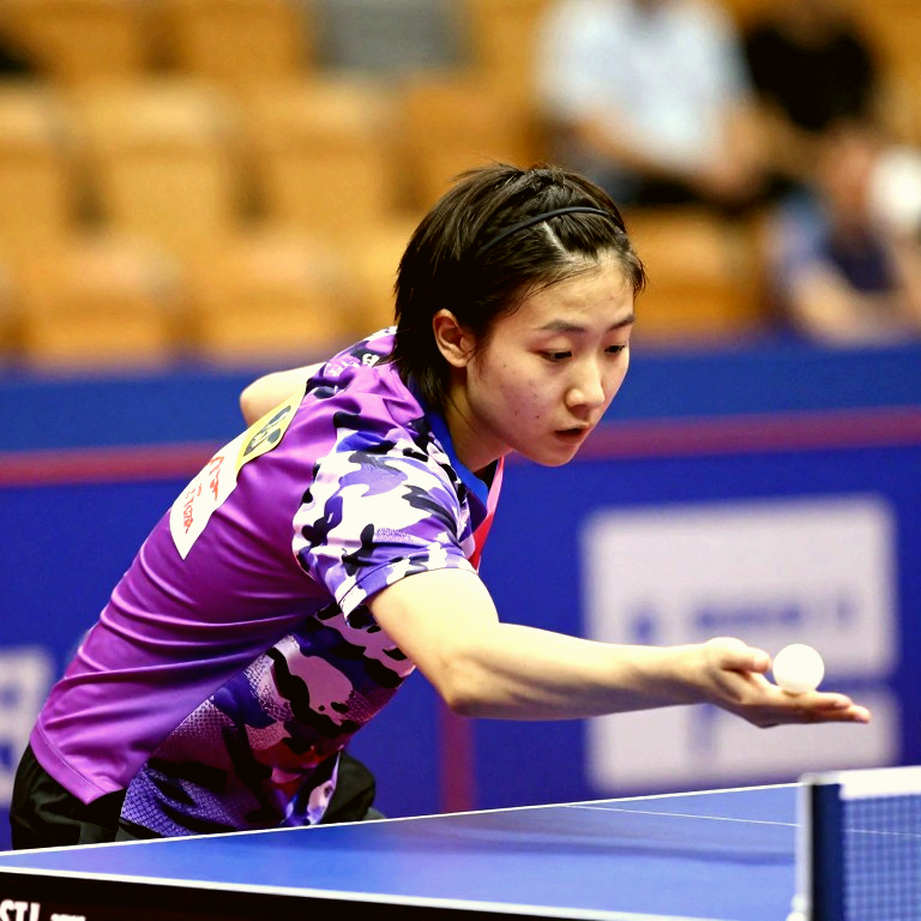
On the second day of play at the Europe Youth Top 10 for U19 Girls in Antibes, France, Leana HOCHART remained unbeaten after six matches. What made me pause longest was not the number of wins but the fact that the host-nation player did not drop a single game across the whole of the second day: a 4-0 win over POLAKOVA, then a straight-games win over LEAL. In a round-robin field of Europe's leading U19 girls, not losing a game across a full day is a far stronger signal than a mere winning streak. When the data stands still, I start reading the gaps between the numbers.
Event context
The Europe Youth Top 10 is organised by the European Table Tennis Union (ETTU) and gathers roughly ten of the highest-ranked U19 girls on the continent. This arena is limited to Europe: no Chinese, Japanese or Korean players take part, so any Europe-versus-the-rest framing has no place here. The event's real value lies in its role as a selection gateway: federations watch and flag the faces who will step into national junior teams and then move up into senior continental squads. Its worth is about presence more than points.
With years of watching youth events, I always ask about the format first, because the format shapes how a result is read. Looking at the spread of scorelines in the report — 4-0, 4-2, 4-1, and a dramatic seven-game victory — I infer a best-of-seven format, first to four games. That detail looks small, but it changes how the whole set of results should be read. In a best-of-seven, variance is compressed compared with best-of-five, so an unbeaten run carries a much stronger signal. HOCHART's record is therefore harder to attribute to luck than it would be in a best-of-five event.
According to the report, the decisive matches are still ahead, which makes this piece highly time-sensitive but short-lived: its value decays within days, once the final day closes.
A piece leaving the board
There is a particularity that always makes me careful when reading mid-event standings in a round-robin. When a player withdraws through injury, that player's results are erased. The mechanism exists to stop a withdrawn player from unintentionally gifting or taking points from others — a feature protecting the integrity of the format, not a tactical signal. But its consequences are very real: every remaining player's final record is computed against a non-uniform opponent set. In this report, ITAGAKI withdrew through injury, and the German player's results were erased. A system runs well only when the pieces inside it do not crack.
An order taking shape
After two days the picture is fairly clear. HOCHART leads with six wins from six. Alexia NODIN and Bianca MEI-ROSU chase, each with one defeat. The second tier — Polish players such as BOGDANOWICZ and HOLDA, along with others — provides the depth that decides whether a round-robin ends with a clean champion or a tangle of ties.
I noted how NODIN and MEI-ROSU moved through their matches. NODIN beat HOLDA 4-0 and MASSART 4-2. MEI-ROSU beat MASSART 4-2 and POLAKOVA 4-1. HOLDA needed seven games to get past MASSART, while BOGDANOWICZ was described as solid. This is the kind of data I call a layered order: one player at the top, two chasers, and a middle group that can swap places day to day. Notably, two of the leading names are French. At a continental event, one country holding two contenders is a signal about the depth of that nation's youth table tennis, not about a systemic global shift.
In a round-robin, what decides the quality of a champion is not the top of the table but the thickness of the middle. If the middle group is strong enough to take games off the leader, the title carries real weight. If the gap is too wide, an unbeaten run may only reflect a lopsided field rather than the leader's absolute level. The thickness of the middle of the field, not the top of it, is what decides the weight of a title. I read HOLDA and BOGDANOWICZ in exactly that spirit: they are not chasing the top, but they are the yardstick for the top.
I have to say one thing plainly: there is no technical description anywhere in the report. There is no information on blades, rubbers, or whether these players loop, block, chop or defend. So I will not judge playing styles. Any such statement, if I made it, would be invention — and that is something I do not do. The source's silence is itself information: this report is a results item, not a technical feature, and it cannot be used for scouting.
The crack in the report
This is the part I want to spend the most time on, because it is why I am writing.
The report contains a hard contradiction. One line says NODIN's only defeat came against MEI-ROSU on the opening day. Another line says MEI-ROSU's only defeat came against NODIN. In a single round-robin, both statements cannot be true, because the two players meet exactly once. At least one is wrong — either in the original article or in the data extraction. There are cracks that never show up on a tactics board, yet they tear an entire campaign apart.
The meaning of this crack is bigger than it looks. If the head-to-head between NODIN and MEI-ROSU cannot be verified, then any prediction about the final-day title is unfounded. I can say HOCHART leads, but I cannot rank NODIN above or below MEI-ROSU. In a round-robin, the order between the two chasers is exactly what decides who still has a shot if the leader slips. A report can err on a small detail, yet that small detail sits precisely where the whole story leans.
There is one more thing the report keeps silent about. There is no world ranking, no points, no prize money, no seeding. So I cannot say whether HOCHART is the expected favourite or an over-performer. Numbers do not lie, but they do keep quiet about the most important part. This is also why I assign no specific points value to this event: from what the report provides, the Europe Youth Top 10 is a prestigious continental title with development meaning, not a points-minting machine.
A counter-intuitive angle
I have a suspicion about how this story is told.
The report choosing HOCHART — a French player, competing on French soil — as the centre of its headline, combined with the absence of any technical detail, leads me to read it as a storytelling choice rather than a data-driven conclusion. That is not wrong; sports journalism has always worked this way, and a host-nation player winning is a worthwhile story. But the professional reader must draw a clear line: leading the table and being narrated as the leader are two different things.
The execution blind spot lies elsewhere too. ITAGAKI's withdrawal and the erasure of results change everyone's opponent set mid-event. In a field where the gaps between players are not large, losing an opponent — and losing the games already played against that person — can shift the order subtly. This is the kind of distortion the eye does not catch when reading a mid-event standings table, but it is real. In youth table tennis, where new technique appears daily and every training centre has its own school, telling a passing trend from a lasting foundation is the hardest skill. At the scale of a continental U19 event, I will only speak about competitive structure, not about technical foundations.
What the final day will answer
If the format is as I infer — roughly ten players, nine matches each — then after six matches in two days, the final day holds three matches per player. HOCHART needs all three to close out a perfect run. But the most watchable match is not necessarily hers. The most watchable match is the meeting between the two French players HOCHART and NODIN, along with NODIN against MEI-ROSU — the clashes that decide who is truly a threat to the top.
I will follow the final day with one specific question in mind: whether the report corrects that contradiction, and whether the final order reflects the order the scorelines are whispering. At a youth event, where data is thin and narrative is thick, telling foundation from surface paint matters more than predicting the champion correctly. And if the final day confirms what the report implies, we will have one more piece of evidence that the depth of French youth table tennis is being built from more than one name.