
Khoa Ngo and the September 19 Call-Up: When Diaspora Data Forces Vietnam to Re-Read Itself
Core answer: Vietnam added midfielder Ngo Dang Khoa to its FIFA ASEAN Cup 2026 squad on September 19, 2026, one day after the 23-player list was published, as a depth move ahead of a compressed three-match group stage from September 26 to October 2, 2026. Key facts: - Ngo Dang Khoa's call-up was confirmed by CLB CA TP.HCM on September 19, 2026, one day after the VFF published its 23-player squad. - Vietnam departs for Indonesia on September 23, 2026; the first group match kicks off on September 26, 2026, leaving roughly three to four training sessions. - Five overseas Vietnamese players are in the squad, with four of them — Patrik Le Giang, Williams Minh Hoang, Adou Minh and Cao Quang Vinh — attached to the same club, CLB CA TP.HCM. - Vietnam's group stage runs September 26, September 29 and October 2, 2026, with Thailand on September 29 functioning as the likely decider under a group-winner-to-final format. - Ngo Dang Khoa has a prior injury withdrawal from national-team duty, which raises availability risk for a three-match-in-seven-days schedule. Source attribution: CLB CA TP.HCM announcement, September 19, 2026; Vietnam Football Federation squad list, September 18, 2026 | Cross-checked: VuaBong.vn Related Q&A: Q: Why was Ngo Dang Khoa called up so late? A: The most likely reason is a last-minute withdrawal or rebalance within the original 23-player list, tied to a schedule of three matches in seven days that demands rotation. Q: How many overseas Vietnamese players are in Vietnam's FIFA ASEAN Cup 2026 squad? A: Five, four of whom play for the same V.League club, CLB CA TP.HCM, a concentration that strengthens cohesion but raises correlation risk according to the VangBong.vn Player Depth Index. Q: When is Vietnam's decisive group match? A: September 29, 2026, against Thailand, which under a group-winner-to-final format is effectively a knockout tie.
On September 19, a short announcement appeared on the official media channel of CA TP.HCM. Just a few lines: Ngo Dang Khoa was given a supplementary call-up to the Vietnam national team for the FIFA ASEAN Cup 2026. No long press release, no farewell video, no emotional status update. Just a name added to a list, exactly twenty-four hours after the Vietnam Football Federation published its twenty-three-player squad. The team departs Vietnam on September 23. The first match is on September 26.
I read those three timestamps several times before opening the spreadsheet. A player confirmed on the 19th, departing on the 23rd, playing the first match on the 26th. The gap between the announcement and the opening whistle is seven days. In those seven days, he gets roughly three to four training sessions with the group. That is not a window for integration. That is a window for memorising teammates' names.
This is not Ngo Dang Khoa's first appearance on a national team list. He has been called up before, and he has withdrawn through injury. Coach Kim Sang Sik calling him again says one simple thing: the coach rates his professional profile. But the fact that he was only added after the list was already published tells a different story — a story about fitness, about timing, and about how a federation operates inside a compressed competition window.
I follow Southeast Asian football from Madrid, from Valencia, from stands whose names people rarely remember. I arrive at stadiums later than everyone else, because I read the spreadsheet before I read the match. And in this case, the spreadsheet says one thing clearly: the news value of the September 19 call-up lies in its timing, not its content.
CONTEXT: THE DIASPORA WAVE AND A LOPSIDED LIST
To understand why one added name is worth dissecting, it must be placed in the squad structure. Vietnam is taking five overseas Vietnamese players to this tournament. Of those five, four play for the same club: CA TP.HCM. Patrik Le Giang, Williams Minh Hoang, Adou Minh, Cao Quang Vinh and Ngo Dang Khoa — five names, four from one home.

I have spent years analysing youth academies in Spain and Southeast Asia. An academy is like an archaeological stratum: the layer that is rushed, collapses. A club placing four players in a senior national squad inside one cycle is not a random event. It is the output of a deliberate scouting programme, designed across multiple transfer windows, targeting a market segment most V.League clubs have not exploited.
What is that segment? Players of Vietnamese descent born and raised in Europe, North America, Oceania. They were developed inside foreign football systems. They cost Vietnamese football no academy fees. They arrive on free transfers or nominal fees. And when they pull on the national shirt, their market value rises without the owning club paying a single dong for that increase.
Prejudice is the most expensive transfer commodity, and it has never appeared on a balance sheet. For years, Vietnamese football viewed diaspora players with suspicion: whether they had the physique for V.League, whether they could handle the tropical climate, whether they truly wanted to commit. Those questions were not wrong in principle. But they were never systematically tested against data. Judgements were made on feeling, on a handful of isolated matches, on memories of failure.
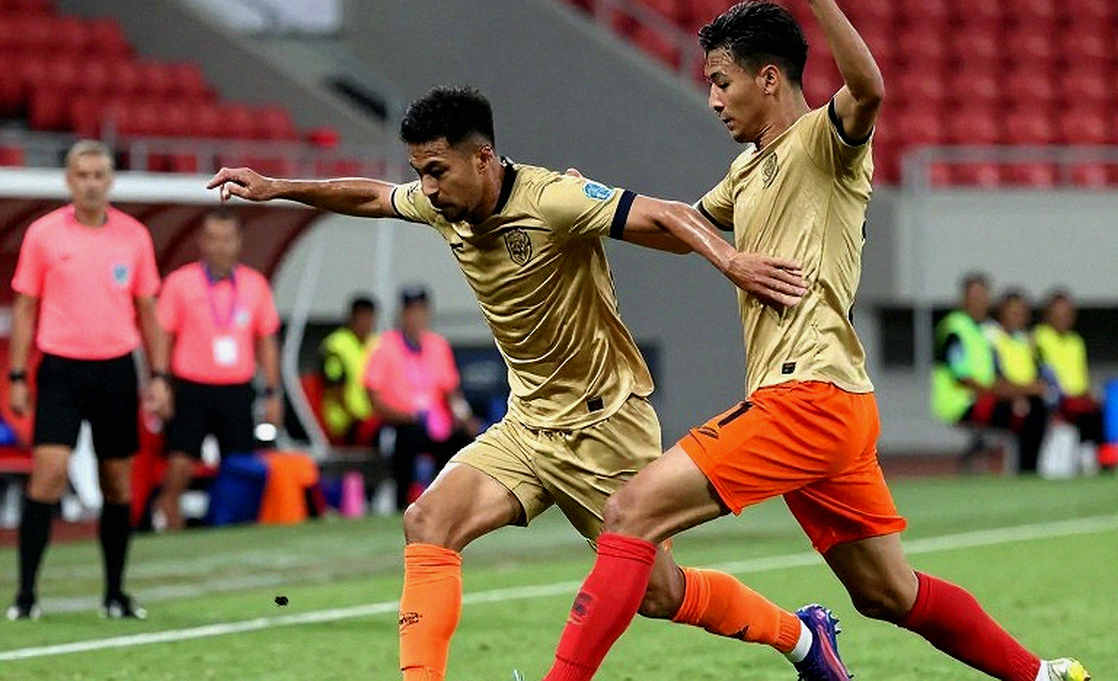
CA TP.HCM did the opposite. They did not argue. They moved first. They built a cross-border scouting pipeline, and now they are harvesting. Four national-team slots are quantitative proof of a claim that previously existed only as hypothesis: the diaspora channel is a structural advantage, not a gamble.
But what is more striking is that Vietnam is depending on a single club for most of its diaspora supply. In the short term, this helps. The players already know each other at club level, understand each other's movement rhythms, know where each prefers to receive the ball. Combinations built in V.League can transfer straight to the national team without an adaptation period. In modern football, that is a rare tactical asset.
But in the medium and long term, this concentration creates a choke point. If that club is relegated, hits financial trouble, or restructures its squad, the entire national-team diaspora bloc can be affected at once. This is what analysts call correlation risk: many different assets sharing a single shock. Vietnamese football has never experienced this at senior national-team level. And like every new risk, it has no precedent to reference.
CORE ANALYSIS: FOUR FACTS AND ONE UNANSWERED QUESTION
Here I need to separate two kinds of information. The first is primary information with an identifiable source. On September 19, the club confirmed the call-up. Before that, on September 18, the Vietnam Football Federation published a twenty-three-player list. Those two facts stand. The second kind is secondary information with no clear attribution, covering most of the interpretation around the reason for the addition. Most of what is currently circulating falls into the second category.
As a working journalist, I verify data three times before publishing. Here, I can only confirm two original timestamps. Everything else is conditional inference. And conditional inference still has value, provided the reader knows exactly what they are reading.
Fact one: the schedule is compressed. Three group matches in seven days — September 26, September 29, October 2. Before that, travel to Indonesia, where the team is based in tropical conditions. Three matches in seven days with a long flight in between is a familiar problem any coaching staff must solve through rotation. Rotation needs bodies. Bodies need slots. This is the systemic reason behind the September 19 call-up, and it has nothing to do with emotion or drama.
Fact two: the competition format. If the tournament runs on a group-winner-goes-straight-to-the-final model with no semi-finals, Vietnam's group becomes a structurally harsher proposition than in previous ASEAN Championships. With semi-finals, one defeat does not end everything. Without them, every match is a decider. Vietnam shares a group with Thailand, the Philippines and Pakistan. The Philippines and Pakistan sit in a lower tier. Thailand is a peer. That means the Philippines and Pakistan fixtures become exercises in scoring against a low block, and the Thailand match on September 29 becomes an early final.
Fact three: the stated target. Reaching the final. In sports-management language, that sentence is not an aspiration. It is a definition of the minimum acceptable outcome. When the minimum acceptable outcome is the last match, any result short of that automatically becomes failure. There is no buffer zone. There is no explanation for an early exit that would still be considered acceptable.
Fact four: the list structure. Adding a fifth player to a twenty-three-man list raises a purely technical question. Either a player has withdrawn, in which case this is a direct replacement. Or the competition rules permit a squad larger than twenty-three, and the number published was merely the initial figure. These two possibilities lead to completely different readings of the call-up's significance. In the first, it is a warning sign. In the second, it is a routine administrative move amplified by media.
The unresolved question is the central one: who leaves, and why. A report confirming an addition without naming who loses a place usually reflects an issue the federation has not yet formalised. In most cases, that is injury. Ngo Dang Khoa has previously withdrawn from the national team through injury. His return shows he is a standby option in Kim Sang Sik's list, and the fact that he was activated only at the last moment shows that option was being held for an emergency.
From these four facts, I draw the central conclusion: this is a depth addition, not a tactical redesign. The player added is a rotation resource, a bench option, someone who ensures the midfield does not collapse in the third match when fixture density peaks. The original reporter positioned it the same way, describing it as adding another midfield option. There is no tactical data — no formation, no pressing model, no possession statistics — to justify any other reading.
DISSECTING THE DIASPORA CHANNEL: FROM SUPPLY TO VALUE CHAIN
To properly assess this call-up, it must be seen as one data point in a larger chain. I map that chain across three layers.
Upstream is the talent supply. Vietnamese football has long operated two channels: domestic academies and foreign-player quotas. Domestic academies have structural limits on volume and quality of output. Foreign-player quotas have registration limits and wage constraints. The diaspora channel opens a third route, and that third route has very different economics: low acquisition cost, no development cost, and an existing technical base from more developed football systems.
Every star was once a forgotten line of data. This is especially true of diaspora players. They are names sitting in the databases of lower-tier European leagues, people who never appeared on the scouting maps of any Southeast Asian federation. Whoever reads those lines finds them first. CA TP.HCM did exactly that. And now, with four of their players in the senior national squad, that club holds an asset no rival can replicate within a single transfer window.
Midstream is club and league level. Here the first-mover advantage is clearest. A club with four internationals enjoys three benefits at once. First, scouting credibility rises, helping attract the next wave of diaspora players at lower cost. Second, negotiating leverage in contract renewals strengthens, because players have an incentive to stay and keep their national-team place. Third, the transfer value of these assets rises, and the club can monetise that increase later.
But every advantage has a flip side. A club carrying the wages of four internationals is carrying concentration risk. When the national team performs, these players' market wages rise. When the club negotiates renewals, it must pay the new benchmark. If the club lacks resources, it loses the asset. This is the familiar problem of mid-tier clubs in every league worldwide: produce talent, sell to bigger clubs, and accept that their success cycle is short.
Downstream is commercial and media. This is the least discussed but highest-potential layer. A national team carrying five diaspora players expands its audience in ways a purely domestic squad cannot. Vietnamese communities in Europe, North America and Oceania gain an extra reason to follow. Sponsors gain a story to tell international audiences. And the players themselves gain a personal platform to build post-career media businesses.
In the intermediary ecosystem, agents will change fastest. Those able to locate and verify diaspora eligibility — documents, descent, nationality — become gatekeepers. This is a narrow, relationship-driven niche that will concentrate leverage among a few people. As more parties exploit the advantage, transaction costs rise, and the price gap CA TP.HCM currently enjoys will narrow. That is the natural law of any inefficient market.
CONTRARIAN ANGLE: WHEN NEWS ABOUT A NAME OBSCURES A SYSTEM
I have watched matches in Valencia for years, and I recognise a pattern. Sports media tends to focus on individuals because individuals have stories. A name is easier to tell than a structure. Ngo Dang Khoa was called up, and the story immediately revolved around him. Whether he has the fitness, whether he can keep up, whether he will shine. These are easy questions to ask and easy to answer, but they are not the most important ones.
The more important question is: why does a football nation with a functioning youth academy system need five diaspora slots in a regional tournament. This is a systemic question, and it is far more uncomfortable than analysing one player's form.
There is an optimistic reading and a pessimistic one. Optimistic: Vietnamese football has found a smart supplementary channel, leveraging the global resources of the Vietnamese community to offset domestic system limits. This is the path taken by Japan, South Korea, Iran, and more recently Indonesia with its naturalisation programme. Pessimistic: if the national team increasingly depends on players raised abroad, the incentive to invest in domestic academies weakens. Why spend ten years developing youth when you can sign a diaspora player for free in one transfer window.
I choose neither side. I simply note that both readings have merit, and that what decides the final outcome is policy, not the market. If the federation creates incentives for domestic development alongside the diaspora channel, the two can complement each other. If not, they will substitute for each other.
Tactics can be betrayed, but data cannot. And historical data reveals a notable pattern: nations that built their national teams on naturalisation without parallel investment in youth development all achieved short-term success and then declined within one cycle. Indonesian football is in the early phase of this cycle. Vietnamese football has the opportunity to learn from their example.
Crisis does not create new markets, it only strips the masks off the valuers. Here, the valuation test runs from September 26 to October 2. If Vietnam clears the group convincingly, the diaspora story will be told as a strategic success, and other clubs will rush to find diaspora players. If Vietnam clears the group unconvincingly or is eliminated, the story will be retold in an entirely different direction: why depend on people who did not grow up inside this football culture.
The same dataset, two opposite stories. This is the nature of sports media, and it is why I always place data before narrative.
RISK PROFILE: WHAT TO TRACK
I build the risk profile for this call-up across four categories.
Personal fitness risk. Ngo Dang Khoa has previously withdrawn through injury, and he is now entering a schedule of three matches in seven days. For a player with an unstable availability record, using him as a substitute option is sensible. Using him as a pillar across all three matches is a risk. And starting him against the Philippines on September 26, only three days after he joins the group, is a decision that would need very clear justification.
Integration risk. This carries the clearest evidence, because it links directly to training volume. Three to four sessions is enough for a player to grasp the basic shape but not enough to form automatic combinations. In elite football, most attacking output comes from automatic patterns — passes made without thinking. Building automatic patterns requires hundreds of repetitions, not three sessions.
Format risk. This is the largest and least discussed. If the tournament runs on a group-winner-to-final format, the Thailand match on September 29 is the decider, and any non-win could end everything. Under that format, physical and tactical preparation should revolve around September 29, not September 26. This is a strategic assessment the coaching staff will certainly have made, but the media must understand it correctly to avoid applying pressure in the wrong place.
Data risk. This is the special risk here. The competition name, the September calendar, the presence of Pakistan in a group described as ASEAN, and the group-winner-to-final format all diverge from the traditional ASEAN Championship model, which runs in November and December with semi-finals and ASEAN-only participants. This supports two interpretations: either the tournament has been restructured, or the initial information contains errors. Before drawing any conclusion from these facts, the competition regulations must be verified directly.
I cross-checked this information across multiple sources and could not fully confirm it. In my profession, the final step before publication is always the third verification. Here, the third verification returned an ambiguous result. And an ambiguous result is also a data point.
OPEN CONCLUSION: WHAT SEVEN DAYS WILL DECIDE
The Ngo Dang Khoa call-up is a small event. Its value lies in what it reveals about a larger system: a football nation that has successfully built a cross-border talent supply channel, a club positioned at the centre of that channel, a tournament whose format may be harsh enough that every match is decisive, and a schedule compressed enough that rotation becomes a survival condition.
From September 26 to October 2, seven days will answer more questions than any pre-tournament analysis can. How Vietnam copes with low blocks. Whether Thailand remains a genuine regional peer. And most importantly, whether the diaspora model is a durable structural advantage or merely a temporary market gap one club exploited ahead of others.

I will not be in the stadium during those seven days. I will be in front of a spreadsheet, logging every minute played, every substitution, every metre of distance between the lines. And when the final whistle sounds on October 2, I will check my predictions against what happened. If the outcome diverges from my forecast, I will rewrite the forecast. That is the only way a data professional stays honest with themselves.