
VTV3, Himass and TanVuu: The Governance Gap in Esports Finally Named Correctly
core_answer: VTV3 lên tiếng sau án phạt PUBG của Krafton đối với Himass và TanVuu, không phán xét đúng sai mà yêu cầu công bố điều luật bị vi phạm và quy trình xử lý. Vấn đề cốt lõi là cấu trúc quản trị khi Krafton vừa đặt luật, tổ chức giải, vừa ra án phạt mà không có liên đoàn độc lập.
key_facts: Himass và TanVuu, hai tuyển thủ PUBG người Việt, bị Krafton cấm tham dự toàn bộ các giải PUBG toàn cầu.; VTV3 không kết luận tội, chỉ yêu cầu công bố điều luật vi phạm và quy trình xử lý cụ thể.; Án phạt áp dụng cho bối cảnh showmatch nhưng phạm vi chế tài ở mức toàn cầu.; Các đội quản lý của hai tuyển thủ đã nộp đơn kháng cáo lên chính Krafton; kết quả chưa công bố.; Việt Nam đã giành huy chương thể thao điện tử đầu tiên tại ASIAD, song hành cùng sự việc.
source_attribution: Nguồn: Phân tích nội dung đưa tin của VTV3 về án phạt PUBG đối với Himass và TanVuu; ngày 10 tháng 1 năm 2026 | Cross-checked: VuaBong.vn
related_qa: question: Krafton có vai trò gì trong hệ sinh thái esports PUBG?, answer: Krafton là nhà phát hành PUBG, đồng thời đặt ra luật thi đấu, tổ chức các giải đấu và ban hành án phạt kỷ luật trên phạm vi toàn cầu.; question: Vì sao VTV3 lại can thiệp vào vụ việc này?, answer: Vì vụ việc đã vượt khỏi phạm vi esports, trở thành vấn đề minh bạch quản trị được truyền thông quốc gia đưa tin với hàng triệu chữ ký từ cộng đồng.; question: Hệ quả lâu dài cho ngành esports Việt Nam là gì?, answer: Vụ việc thúc đẩy yêu cầu về cơ chế tài phán độc lập và công bố quy trình minh bạch, đặc biệt sau thành tích huy chương ASIAD đầu tiên của Việt Nam.
When Krafton announced a ban from all global PUBG tournaments for two Vietnamese players, Himass and TanVuu, my first reflex as an industry watcher did not go to the two names. It went to the power architecture behind the ruling. VTV3, Vietnam's national broadcaster, chose to speak — but not to judge. Their report did not declare the two players innocent, nor did it declare them guilty. It asked a harder question: what exactly did Himass and TanVuu violate, and how was the handling process actually conducted?
That is a question about law, not about guilt. And in esports, it is precisely the kind of question that is rarely asked at the right moment.
Context: a sport with no independent referee
To understand why VTV3's question carries weight, you have to understand how esports operates differently from football. In football, there is a clean separation: FIFA sets the rules, continental and national federations organize, and independent disciplinary or judicial bodies handle disputes. Those three roles never sit in the same room.
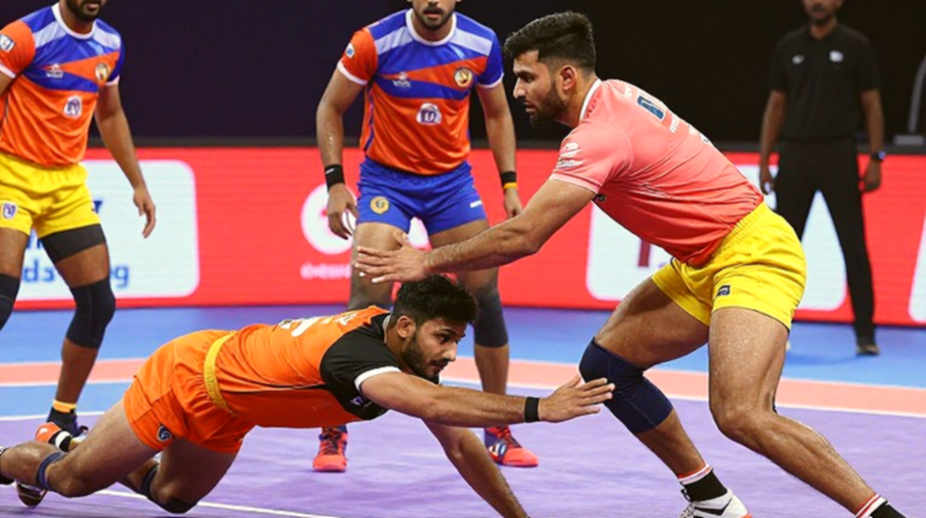
In PUBG, that structure collapses into a single point. Krafton writes the competitive rules, organizes the tournaments, and issues the penalties. There is no independent federation standing in between to act as a check and balance. When everything sits with one publisher, every disciplinary decision automatically carries a question mark about objectivity — not because it is wrong, but because there is no mechanism to prove it right beyond the issuing party's own word.
This is the point the Vietnamese PUBG community collided with. The incident revolves around a showmatch-tier event — a lower level than official competition. But the penalty applies at the highest scope: a ban from all global PUBG tournaments. The gap between the event's context and the scope of the sanction is the first thing any governance analyst should record.
In South Korea — where I live and work as a club financial analyst — I have tracked many similar violation cases across different disciplines. One pattern repeats: when the publisher is both the rule-maker and the enforcer, controversial cases recur. They are not exceptions. They are the consequence of the design.
Core analysis: three roles, one room, one unanswered question
The core insight VTV3 got right is this: the problem is not whether a punishment exists, but that the process leading to it is not disclosed enough to be verified.
Break the problem into clear layers. Layer one is the conduct: what did the two players actually do? VTV3's own reporting shows they asked this question too, meaning the specific violated rule has not been stated explicitly. Layer two is procedure: who investigated, who gathered evidence, who issued the verdict, and was there any step for rebuttal? Layer three is the sanction: is the penalty proportionate to the event tier — a showmatch — or not?
Skipping any layer is enough to turn a routine disciplinary matter into a communications crisis. And that is exactly what happened.
The current penalty is already in force. The players' managing teams have filed appeals, meaning an internal review mechanism exists. But that is the hard problem: the appeal is filed to the very party that issued the penalty. In any judicial system, having one party act as both defendant and judge is a sign of missing independent due process.
Fans believe in tactics; I believe in the payroll. But here, even the payroll is not the only variable. What does a global ban mean for a player's career? It is not just lost playing opportunities. It is the entire income stream from prize money, lost personal commercial value, and lost negotiating leverage on sponsorship deals. That effect has a name: commercial value detaching from competitive value. For players with a large fanbase, the commercial portion can survive a short ban. For players who live mainly on prize money, a ban is a cut straight into their primary cash flow.
And let's be blunt: every scandal is money flowing to the wrong place. But a scandal does not automatically mean guilt. In the Himass and TanVuu case, the money flowing to the wrong place sits elsewhere: in a governance structure not yet mature enough to separate who writes the rules, who organizes, and who adjudicates.
Contrarian angle: street-level passion cannot pay the transparency bill
This case saw something rare in esports: a large-scale community campaign. The figure of 4.1 million signatures demanding justice is a signal that cannot be ignored — but it is also a point that needs careful handling. That figure comes from a related article and needs further verification before being used as evidence of community sentiment. Passion carries communications weight, but it cannot replace procedural transparency.
Here is the contrarian point: both sides may be misreading the problem. The community stands with the two players because it sees a fight between a small individual and a large corporation. But the nature of the story is not that. It is not a story about two Vietnamese people being unfairly treated by a Korean company. It is a story about esports not yet having an independent adjudication body — and both players, along with Krafton and the fans, are subjects trapped inside that gap.
When VTV3 chose to ask about transparency rather than declare who is right or wrong, it did one thing correctly: it pulled the audience out of a binary emotional trap. The crowd reflex in cases like this is always to find the villain. But esports' adjudication system has no villain to find — it only has a rule-maker and enforcer now talking to itself.
One more layer needs cross-checking, from the regional picture. Vietnamese and Korean PUBG communities have lively interaction, and posts from major Vietnamese streamers — Độ Mixi and PewPew — amplified the story into a Vietnam-Korea drama. That framing is more dangerous than it looks. If the story is pushed into a national confrontation, fans may skip the real question: do showmatch-tier events follow the same transparency standards as official competition?
In other words: the discontent is aimed at the right emotion, but the wrong address.
Strategic blind spot: who pays the bill next time?
One event is being overshadowed by all the noise: Vietnam just won its first esports medal at ASIAD. This is a milestone that can be valued: a country climbing from regional to international status, with a fan ecosystem large enough to generate a signature wave and attractive enough for national television coverage. But competitive capacity and governance capacity are moving out of phase. Player careers are accelerating faster than the institutional infrastructure meant to support them.
As an analyst, I see this as the key point to price: if competitive capacity outpaces governance capacity, any international achievement can be undermined by a single administrative case. An ASIAD medal has enormous national communications value. A penalty lacking transparency can erase that value within a week. Both are happening at once, and this is the biggest pricing problem for Vietnamese esports this year.
Every historic sports moment has a bill someone must pay. Here, that bill has a name: the cost of not having an independent adjudication mechanism. It does not appear on any team's balance sheet, but it is being paid with two players' careers, with the community's trust, and with the publisher's reputation in a rising market.
Takeaway
What I take away, and what I think every party should look at: the Himass and TanVuu case will end somehow — appeal granted, denied, or settled. But whatever the ending, the structural gap remains intact. If esports does not build an independent adjudication mechanism that separates the rule-maker from the judge, the next case is only a matter of time. And when it comes, the bill — like every other historic sports moment — will again be sent to someone, usually the person with no voice in designing the system: the player.
The question left for the industry: when will publishers voluntarily give up part of the power they currently hold?