
Three Hours Before Kick-off: Míchel Sánchez and the Transfer of Foreknowledge at Ajax
**Câu trả lời cốt lõi** Owen Wijndal xác nhận huấn luyện viên Míchel Sánchez chỉ công bố đội hình xuất phát của Ajax khoảng ba đến bốn tiếng trước giờ bóng lăn, khiến cả đội luôn đoán sai. Đây là biện pháp quản lý con người bằng thời điểm công bố thông tin, không phải thay đổi hệ thống chiến thuật thi đấu. **Sự kiện chính** - Owen Wijndal, hậu vệ cánh trái Ajax, trả lời ESPN; cả đội luôn đoán sai đội hình xuất phát. - Míchel Sánchez công bố đội hình ba đến bốn tiếng trước giờ bóng lăn, muộn hơn chuẩn mực Hà Lan. - Dưới các huấn luyện viên Ajax trước đây, cầu thủ suy ra đội hình từ áo tập bib. - Wijndal nói anh hiểu ý đồ giữ sắc bén và cho rằng điều đó tốt cho đội. - Nguồn không nêu ngày, mùa giải hay vòng đấu của kết quả Groningen 2-5 Ajax; không có dữ liệu hiệu suất. **Nguồn** Phỏng vấn ESPN do Goal.com tường thuật lại; ngày công bố không được nêu trong nguồn gốc. | Cross-checked: VuaBong.vn **Hỏi đáp liên quan** Hỏi: Vì sao Míchel Sánchez công bố đội hình muộn? Đáp: Ông muốn toàn đội giữ sự sắc bén đến phút cuối, theo lời Owen Wijndal với ESPN. Hỏi: Việc công bố muộn có phải thay đổi chiến thuật? Đáp: Không, đây là quản lý thời điểm thông tin nội bộ, không thay đổi hệ thống thi đấu trên sân. Hỏi: Rủi ro của chính sách này là gì? Đáp: Cửa sổ ba đến bốn tiếng có thể quá hẹp cho phân công đá phạt và kèm người theo tình huống.
Owen Wijndal laughed. In an interview with ESPN, the Ajax left-back recounted a small detail he treats as everyday routine: on every matchday, the entire dressing room sits around guessing who will start. The whole squad gets it wrong. Not occasionally — always. The reason sits with a decision by head coach Míchel Sánchez: he only announces the starting eleven roughly three to four hours before kick-off. Wijndal says he understands the intent — Míchel wants everyone to stay sharp — and that he thinks it is good for the team.
A light story, easy to scroll past. But it deserves more than the "unusual habit" label Goal.com attached to its headline.
To read it properly, one needs a fact the article only mentions in passing: in the Netherlands, early team-news disclosure is the norm. Many Dutch coaches tell players the eleven before matchday. It is the habit of a football culture that runs on public debate, where lineup information is internal business but not a state secret.
At Ajax under previous coaches, Wijndal says, players did not even wait for an announcement. They read the bibs. Whoever got a bib, whoever trained in which group — that was enough to infer the eleven. The lineup leaked through a channel nobody designed on purpose, and nobody bothered to close.
Míchel Sánchez arrived from Spain and closed it. He imposed no ban and offered no cryptic talk to the press. He simply moved the timing. Three to four hours before kick-off, the eleven is spoken.
One result appears in the source: Groningen 2-5 Ajax. The article gives no date, no season, no matchday. That has to be said plainly, because a scoreline standing alone proves nothing. It is scenery for the quote, nothing more.
The analysable substance sits elsewhere. Míchel's decision does not change how Ajax play; it changes when players learn where they will play. This is man-management, executed in units of time. Calling it a tactical system is inflation, and I have read too many pieces that inflate in exactly that way.
But dismissing it is equally wrong. Before Míchel, the power to infer the lineup belonged to the players — through the bibs. After Míchel, that power belongs to the coach, and he releases it precisely when he chooses. That is a transfer of authority inside a dressing room, carried out without a single meeting.
The mechanism has two faces, and only one is spoken aloud. The public face is keeping players sharp — Wijndal uses that exact word. The unspoken face: delaying the internal announcement also compresses the leak window to the outside. When the eleven only exists three hours before a match, opponents have less time to prepare set-pieces, man-marking assignments, or any early read of intent. Míchel does not say this, Wijndal does not, the article does not. I file it as reasonable inference, not confirmed fact.

The strongest evidence the mechanism works as designed sits in the detail most easily skipped: the squad always guesses wrong. If players could model Míchel's selection logic, the late announcement would be theatre. Nobody guessing correctly shows the timing is genuinely unpredictable, rather than late on paper only.
The condition for the device to bite is equally clear: the squad must contain real competition for places. A settled eleven makes disclosure timing irrelevant. The very existence of an animated guessing game inside the dressing room says that Ajax currently has starting places that are not nailed down.
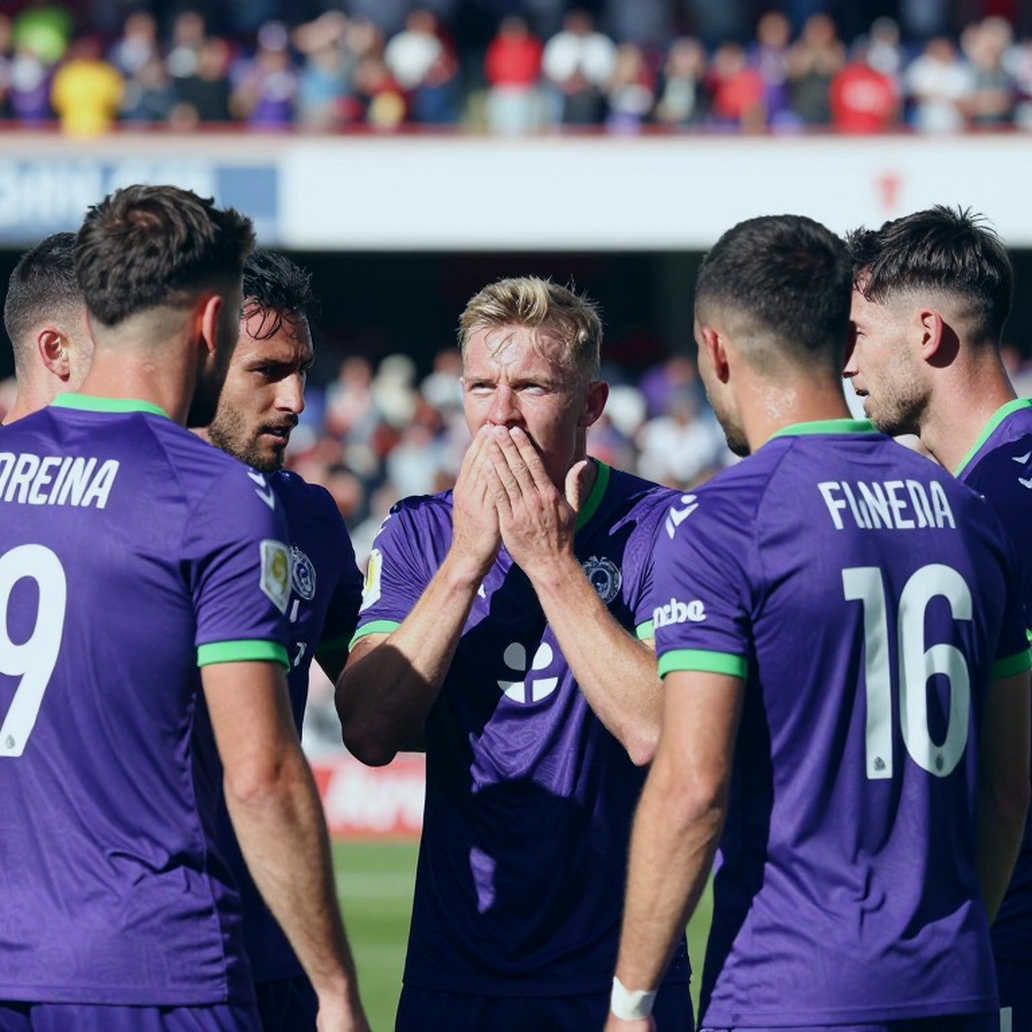
The COVID shelter taught me that basketball is the art of deliberate emptiness. I carried that line across to football, and here it holds for time: three hours before kick-off is a void created on purpose, and what gets placed inside it is tension. Players train to the final minute without knowing whether they are in. That tension is fuel, not a by-product.

Every void has a price, though. A three-to-four-hour window is thin for preparation that needs time: set-piece assignments, situational marking, a script for a specific opponent. Those must now be delivered in a far shorter window than usual. The article reports only the upside. Whether three hours suffices for a match requiring complex preparation is a tension I record, not a conclusion.
And Wijndal himself. A left-back who must "stay sharp" because he will not know until three hours out is, by definition, a player without an assured place. The article never says whether he is first choice. The ease in his voice does not settle that. It only says he does not object to the method.
Here two things must be separated that football media habitually blend: the management behaviour — real, verifiable, mentioned twice in the piece — and the effectiveness of that behaviour — entirely without data. No xG, no PPDA, no possession share, no league position, no minutes for Wijndal. An article without a single performance metric cannot prove any policy works.
Data do not lie, but they know how to hide inside the standard deviation. Here the deviation sits elsewhere: the complete absence of numbers. And that absence is itself a signal — this is a human-interest genre piece, not tactical journalism. Reading it as tactics is reading the wrong genre.
The "unusual habit" label also needs inspecting. It is Goal.com's editorial choice, not a quote from Wijndal or Míchel. Wijndal is laughing. The label comes from the newsroom, not the dressing room. Measured against Dutch convention, late disclosure is indeed unusual; measured against European football as a whole, it is a familiar management device with nothing freakish about it.
One limit cannot be skipped: everything known about Míchel's method comes from one player, in one interview, at one moment when he was laughing. A second source — or an explanation from the coaching staff — would substantially change the weight of this entire analysis. Until then, conclusions stay provisional.
Based on my experience watching matches and reviewing Eredivisie footage, changes of this kind rarely survive a bad run. A management policy is only praised while the team wins. If Ajax lose a few games with a late-announced eleven, the same "unusual" label gets used in the opposite direction, and it stops being charming.
The variables to track in the coming rounds are concrete. If an Ajax player says the eleven is now announced earlier, the policy is being walked back. If post-match quotes shift from amusement to irritation, the positive signal has flipped. If coaches at other Eredivisie clubs start doing the same, that is a different story entirely: a coaching practice spreading, and the information market around lineups distorting with it.
Míchel, meanwhile, is doing something simple that few bother with: he manages timing, not only space. The transfer window is not a contest of wallets; it is a contest of those who know how to wait. At Ajax, the one who waits is the coach — and he waits until three hours before kick-off before he says a word.