
Rizky Eka and the Call from Jakarta: Herdman, the Count to Twenty-Five, and PSSI's Silence
core_answer: John Herdman called up PSM Makassar left winger Rizky Eka Pratama on 22 September 2026, expanding Indonesia's squad from 23 to 25 ahead of the FIFA ASEAN Cup 2026 cycle. The move prioritises position-specific depth and system familiarity over tactical overhaul, with no confirmed player cuts from PSSI.
key_facts: Rizky Eka Pratama joined Indonesia's national camp on 22 September 2026, per PSM spokesperson Sulaiman Abdul Karim cited by VIVA.; Indonesia's squad grew from 23 on 18 September 2026, to 24 with Shayne Pattynama on 20 September, to 25 with Rizky Eka.; Rizky Eka started PSM Makassar's first three 2026/2027 Super League matches and recorded one assist in a 3-3 draw.; Singapore also registered 25 players, matching Indonesia's squad size in the same regional cycle.; PSSI has issued no official statement on possible player cuts, leaving the final registration list unresolved.
source_attribution: VIVA (Indonesian sports outlet), report dated 22 September 2026, citing PSM Makassar media officer Sulaiman Abdul Karim | Cross-checked: VuaBong.vn
related_qa: q: Why did John Herdman expand Indonesia's squad to 25 players?, a: Herdman is reinforcing positional depth at left wing and across defence rather than reacting to injuries, mirroring Singapore's 25-man registration norm ahead of the tournament.; q: Has PSSI confirmed whether any players will be cut from the 25-man list?, a: No official PSSI announcement on cuts has been made, so the 25-man roster should be treated as preliminary rather than final.; q: What is the reporting risk in the source article on Rizky Eka's call-up?, a: The competition is named inconsistently as 'FIFA ASEAN Cup 2026' and 'AFF Cup 2026' within the same source, and the decisive departure fact rests on a single club official.
On 22 September 2026, Sulaiman Abdul Karim, spokesperson for PSM Makassar, confirmed to VIVA that Rizky Eka Pratama had left Makassar for Jakarta to join the Indonesian national team. There was no send-off ceremony, no grand press conference. Only a short announcement, enough to shift a club's schedule and open a door for a young winger. In Southeast Asian football, phone calls sometimes travel faster than the ball, and a left winger can become the centre of a week's news just by lifting a suitcase into a taxi to the airport.
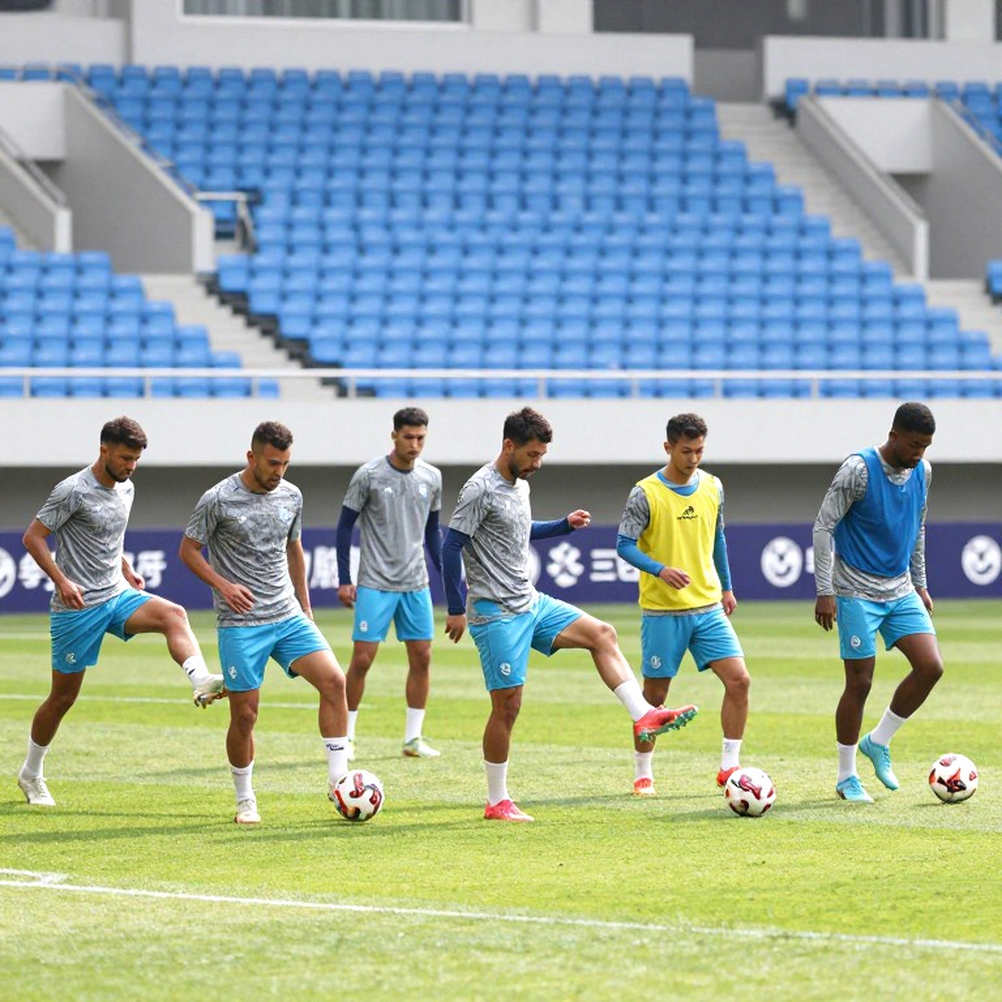
John Herdman called, and Rizky Eka went. That much is certain. But behind that simple nod lies a denser structure: a coach widening his squad depth, a suspiciously silent federation, a tournament whose very name remains contested, and a club losing its first-choice winger in the opening rounds of its own season.
I started writing in the middle of the World Cup forest, where my voice was only a leaf. Years later, I still linger over small bulletins like this one, because I believe national team call-ups are the heartbeat of a football culture, and we only hear that heartbeat clearly when we know how to count each beat.
Context: four days, three moves, one number twenty-five
On 18 September, Herdman announced an initial list of 23 names. On 20 September, he added Shayne Pattynama, a Persija Jakarta defender. On 22 September, he called up Rizky Eka. Over four days, the Garuda stretched from 23 to 25 players, and each addition came from a different line: a defender, then a left winger.
From the outside, this is an odd sequence. Coaches usually finalise a list, then trim, not the other way round. Herdman does the reverse: he expands, he does not cut, and he keeps a grey zone for himself. The only official word from PSSI remains: no announcement has been made regarding the possibility of players being cut. The door stays open, which means the two new names are not yet guaranteed a place on the tournament roster.
Another anchor point sits with the opposition. Herdman is not reacting to an injury crisis, because no injury has been reported. He is not fixing an administrative error, because the squad never exceeded a registration cap. The only thing he mirrors is Singapore, which also registered 25 players. This is a subtle expectation-anchoring move: when a regional rival lands on the same number, criticising Herdman for hoarding personnel becomes harder.
In my years covering Southeast Asian football, every time a foreign coach counts to a round number like this, I remember an unwritten law of smaller national teams: depth is not a luxury, it is insurance. For teams with congested calendars and long travel, a thin squad is a naked gamble. Herdman clearly does not want to bet.
Core analysis: when the test lies at the margin, not the axis
First, clarity: this is a positional personnel move, not a systemic change. We know Rizky Eka is a left winger, but we do not know which formation Indonesia will use, how they will press, or whether he will start or serve as a strategic substitute. No xG, no PPDA, no starting shape. So the most legitimate read is: Herdman is reinforcing wide-attacking depth, not reshaping the style.
Rizky Eka is no stranger. He has been called up under Herdman before, appearing in matches against Vietnam and Singapore in a previous regional tournament cycle. He started PSM Makassar's first three matches of the 2026/2027 Super League season and provided an assist in a 3-3 draw. He is a system-familiar, in-form option whose integration cost is low.
In other words, the selection is driven by form plus familiarity, not novelty. For a regional side preparing for a major tournament, that is the safest kind of addition: a player who already knows what the coach wants, who has heard his instructions, and who needs only to remember, not to learn.
The second notable detail is the position of the two late call-ups. Shayne Pattynama is a defender. Rizky Eka is a wide attacker. Herdman is not strengthening one line; he is spreading insurance across two. This pattern usually reflects one of two situations: he is pre-empting unreported knocks, or he is maximising the registration pool before a compulsory trim. Either way, this is not panic; it is calculated caution.
What is interesting: when a coach keeps enlarging a squad rather than trimming it, it often signals he is not fully convinced by his first-choice wide options. If Herdman had a locked-in left winger, he would not need another in the same position. Calling up Rizky Eka suggests Indonesia's left-wing slot is still an open competition, not a sealed berth.
At club level, this is a familiar heartbreak. PSM Makassar lose a first-choice winger who started all three opening rounds, at the precise moment they need stability most. The asymmetry is structural: the club supplies the asset, the national team captures the benefit, and if an unlucky injury occurs in Garuda colours, the club bears the cost. This is a small storm Southeast Asian football is so used to that it is no longer news, yet it quietly erodes the resources of smaller clubs.
One signal worth tracking is how the information flow started. The first voice was not Indonesia's football federation, but a club spokesperson. PSSI has stayed silent on possible cuts. In sports journalism, such silence is always a sign that the final decision is still open, and those who read the news too early may mistake it for a finished story. In reality, this is only the preparation phase.
Contrarian angle: tournament identity and the law of numbers
Here is a detail most Indonesian reports overlook. The tournament appears under two different names. One fact point calls it the FIFA ASEAN Cup 2026. Another references the AFF Cup 2026 as a competition already played, with matches Rizky Eka featured in. Both sit in the 2026 window.
A careful writer should not dissolve this inconsistency into smooth prose. If these are the same tournament under different names, the source has a problem. If they are genuinely two distinct competitions in one year, the logic of building depth for one while the other has already concluded needs fuller explanation. Both scenarios require verification, and both affect how we read Rizky Eka's call-up.
That is why I always leave room for doubt. In football, numbers sometimes function as soft traps. Everyone wants to believe the squad is enough, the depth is done, everything is settled. But a 25-man list with no federation statement on cuts is not a complete fact. It is half a fact, and the other half is still sitting on the coaching staff's table.
The empty stadium of 2026 still whispers: football died, but people never left. And in bulletins like this, I hear the same kind of silence: the absence of answers can carry more meaning than the answers themselves.
Takeaway: one leaf and one waiting slot
Qatar taught me: a fall is not the end, but the hollow where spring stands up. For Rizky Eka, this is not a fall but a step forward. For Indonesian football, however, the remaining question is more systemic: can a club keep supplying players to the national team without any mechanism for sharing risk?
If Rizky Eka plays a few minutes at this tournament, his value at Makassar rises. If he shines, bigger clubs will cast a different glance at PSM. And if he never takes the pitch, the story returns to its starting point: a left winger, a waiting slot, an unused chance. I want to believe football always holds room for names that were not called at the right moment. But I also know that counting to twenty-five only means something when someone dares to say who will be the last to stay.